by darrell p. finley
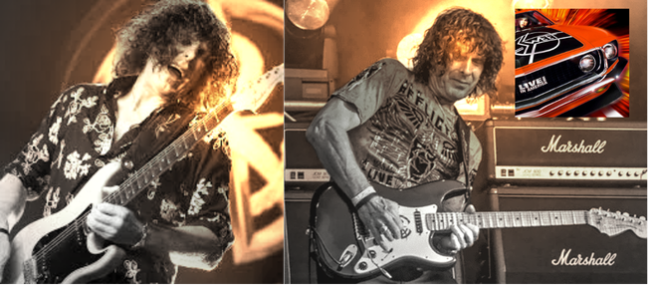
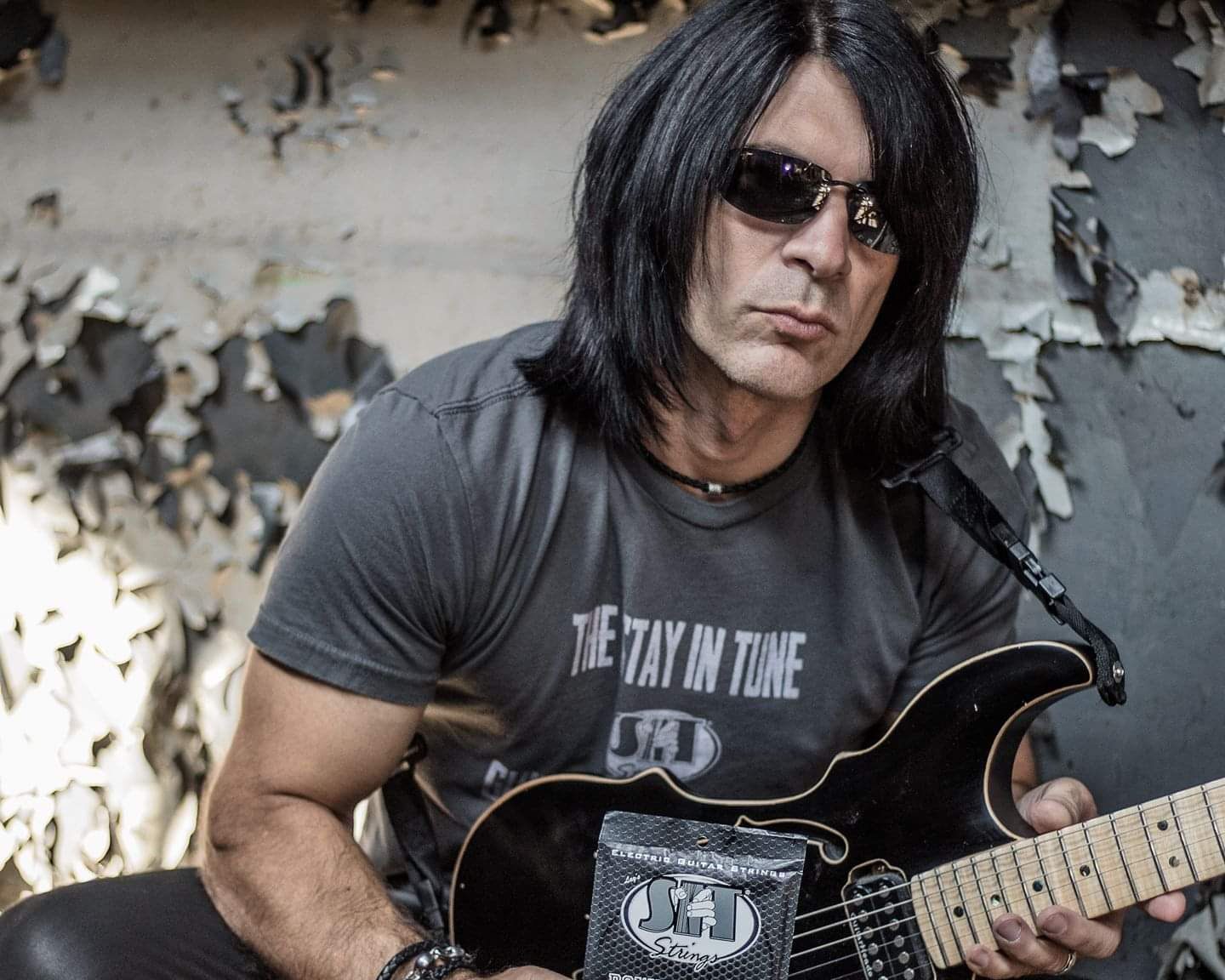
Think you know master shredder Dean Cascione? If you’re a fan, you’re familiar with titles like Guitar Chop Shop and Neoclassical Fire, and Sunrazor is playing in your head as you read this, but how well do you really know him? Did you know that he’s also an internationally recognized luthier as Owner and President of DC Custom Guitars, building and modifying guitars for talent from the US to Europe and Asia, including names like Alcatrazz’s Joe Stump and Godsmack’s Tony Rombola? Or that he’s one of only a few out there who professionally scallops fretboards, inspired by John “Dawk” Stillwell, the man who scalloped for legendary and first rock guitarist to use a scalloped fretboard, Ritchie Blackmore? He fits his heavily relied upon work as a luthier in between playing and, like many master class guitarists, offering a regular schedule of lessons from novice up, and if you think all that keeps him busy and then some, you’re right. But that ain’t the half of it! Dean fills his days as a Senior Business Analyst (Architecture and Integration) for insurance giant, MAPFRE, and adds to his nights additional work as an MSIT Professor in Cybersecurity and Big Data Analytics for Worcester’s renowned Clark University, interestingly and coincidentally, a 1968 performance stomping ground for guitar legend Jimi Hendrix. Then, of course, there’s the The Neolassic Approach to Shred Guitar, a book Dean co-authored with Argentinian partner in shred, Sebastian Salinas, and the numerous endorsement credits associated with the Dean Cascione brand including Floyd Rose, Seymour Duncan, and S.I.T. Strings, to name a few, and you know what? I’ll let him tell you the rest
BLAST MAGAZINE: Hi Dean, so let’s start part one: Dean Cascione, the artist. At what age did you develop an interest in music?
DEAN CASCIONE: Pretty young, around nine. My brothers and sisters were older; they had lots of albums and listened to bands like Journey and Boston. My sisters were into the dance stuff, Michael Jackson and all that. My Brother, Mark, was into Boston, and when I heard those guys, I was like, “Wow, listen to those guitars!” KISS, too; before I was even into music I was into KISS with their movie that was on TV, Kiss Meets the Phantom of the Park, but the thing was that it got me turned on to them then. I still have the trading cards with their pictures and I was totally drawn to Ace Frehley with all his theatrics and poses. That was when I started saying, “I think I wanna be onstage, I think I wanna be a guitarist.” The first time I heard Detroit Rock City, there was that lead that you could just hum and I guess you could say that was my first experience with the rock/metal genre.
BLAST MAGAZINE: KISS was a first for many, marketing geniuses that they are.
DEAN CASCIONE: Oh yeah, my friend had the dolls and all the albums. I didn’t have that many albums when I was a kid, but I think it was a good time to get exposed to music. Then I started playing guitar right around 1980. I was eleven and taking classical guitar lessons. There wasn’t a whole lot to do as a kid besides riding your bike and running around in the woods, so my sister, Denise, got me some lessons from this jazz/classical master from Worcester County. She bought me a hundred dollar guitar and six months’ worth of lessons and said, “Just go try it.” So my mom was driving me out to the lessons, but I was torn, because I want to play the rock stuff where now I’m getting exposed to Ozzy, Ratt, Dokken, Quiet Riot, and he’s teaching me Fly Me To the Moon and all this weird stuff, and I can’t put the two together. I told him I really couldn’t feel the jazz style, but I was starting to get hooked on the classical, then I would come home and I’d be trying to play the power chords, so I wasn’t practicing the other stuff. I did the six months, but I didn’t renew and it wasn’t until I heard the first Ozzy album with Randy Rhoads that I started to hear a lot of the phrases that I was playing in the classical music.
BLAST MAGAZINE: Making Randy your first major influence?
DEAN CASCIONE: Yeah, Randy was really the first, he was so cool. So that was the early 80s. I started listening to a lot of his music, but it’s not like today; you had to hear it on the radio or go buy an album.
BLAST MAGAZINE: Or try to tape it off the radio. I think we all spent hours doing that.
DEAN CASCIONE: Exactly, you couldn’t just go to YouTube and start studying it like the kids do today. It wasn’t until a few years later that I started getting into forming bands, then one day my drummer pulls out Yngwie’s Rising Force album and says, “Hey, can you play this?” And, I’m like, “Ok, I’m gonna quit guitar now, what is that? What is he doing?” I was ready to quit because I was never going to learn how to play like that.
BLAST MAGAZINE: No kidding, his intros alone are totally intimidating when you first hear them as a player.
DEAN CASCIONE: Right, it was just ridiculous, but I was really drawn to it because I loved the classical feel. If you look at the path or the family tree of rock or metal and you assign the guitarist to that, you can say that the two guys that broke out the music for R&B and then classical phrasing would be Hendrix and Blackmore. That would be at the bottom of that trunk. Ritchie started doing those classical phrases and he would mix it with the blues, but he was doing the arpeggios and some pedal point tones. He was too early for me, but then the next guy after Blackmore, you could say, was probably Randy Rhoads, then Yngwie, Vinnie Moore, Joe Stump, and all those guys. They really followed that classical and neoclassical path because they were using all those same phrases.
BLAST MAGAZINE: Oh yeah, Vinnie is one of the few artists whose work I could listen to all day long and not get tired of hearing it.
DEAN CASCIONE: All day long, definitely, because it’s classical music, but on the Jimi side of things, there are tons of other great players, too. You’ve got Page, and I think of George Lynch, who’s awesome, but those guys are more on the R&B side, the pentatonic scales. For some reason, I always followed the guys who were doing the classical thing. But then Randy was definitely the first inspiration who made me just say, “I’d love to do that, I wanna play that.”
BLAST MAGAZINE: It was probably far more reachable, too, and got through to you more than hearing Yngwie for the first time and making the room spin!
DEAN CASCIONE: Oh yeah, hearing Yngwie for the first time was like, “Oh my God, I shouldn’t even be playing guitar, this is just dumb.” But then, after that, I found out that Joe Stump was the local Boston Yngwie, and that he was teaching at Berklee. At the time, he was really dressing like Yngwie, playing the yellow Strat, and he was the Boston, or the Berklee, Yngwie.
BLAST MAGAZINE: Ok, I’m jumping ahead a little here, but how did you guys meet? I know he was your mentor, but you’re friends now, too, right?
DEAN CASCIONE: What happened was I was into Yngwie, I was up at Wurlitzer Music, and I hear this song, and I’m like “Is that an Yngwie song I don’t know?” And the guy says, “No, Stump. Joe Stump.” And it was Night of the Living Shred or one of those off his first album. So, I said, “Who is this guy?” And they tell me, “He’s a teacher at Berklee; you gotta reach out to this guy!” So I’m like, “You can actually reach out to this guy?” Because, again, we come from a generation where you’ve seen these people on TV or in a magazine, or heard them on the radio, but you couldn’t just reach out like you can now with social media.
BLAST MAGAZINE: Yeah, back then unless there was a clinic, you weren’t getting near them, and even clinics had you limited to your minute and a half.
DEAN CASCIONE: Right, the clinics were pretty tight. I saw Vinnie Moore when he did one at Gordon Music in Southbridge, and it’s one of those things where it’s one thing to hear it and another to actually see them play it. It was awesome. But I heard Joe for the first time that day at Wurlitzer’s and I’m saying, “Oh my God, I need to find out more about this guy.” So I basically hunted him down. There was no internet, so it was just the phone book, and I found him and gave him a call. He was really cool; he says, “You wanna come down for a lesson?” So the first day that I met him I’m driving down for my lesson and I’m all nervous. I probably couldn’t even play a note that day; I was just like, “Man, this guy is a god.” But he was such a down to earth, nice guy and we had a lot in common because he’s not just a guitar player, he’s really into the collecting and the gear, different components and all that. So I literally couldn’t play a note that first lesson, but the inspiration came from him. I told him I loved this style of music, but I felt like I was a terrible guitar player and he just said that it could be learned. Up until that point I thought you had to be gifted, a prodigy, you either had it or not. He said he was a crappy guitarist at one point and he pretty much stumbled upon what he needed to learn and how he needed to practice.
BLAST MAGAZINE: To listen to your work, it doesn’t sound as though you started out that way.
DEAN CASCIONE: I was the guy who had all the gear, the look, but I wasn’t very good. I wanted to play at that top tier and, at that time, I couldn’t. But Joe gave me that inspiration; he said, “Look, it’s definitely a learned method, so just stick with it, and if you believe in it, you can do it.” Right there was the breakthrough. Then we started hanging out and becoming friends. I think I only took four lessons from Joe. He is really down to earth, but he’s a brutally honest guy, too, and he’ll give you the feedback you need. When Guitar Chop Shop came out, which was my first baby and me finding myself as an artist, all of a sudden with the inspiration from Joe, I was writing songs. It was going from playing everyone else’s songs to writing my own. I never had any real training, it was only a few lessons, but I was just so inspired. We’ve been great friends ever since and he’s still an inspiration because this guy is one person who absolutely loves to play. If one person shows up at a performance, he’ll go and he’ll play like there are a million people there; he’s a true artist. Right now he’s got so much going on and, if you look at his path, not many people know who he is. He’s a local hero, but not too many know of him outside our small circle and guitarists. He finally just got that big break with Alcatrazz, and look at the history of guitarists with Graham Bonnet and Alcatrazz. You have Yngwie, Steve Vai, Chris Impellitteri, and now Joe Stump. It’s like he’s groomed himself for this and it’s taken some time, but he fits perfectly in that band and he’s played these songs his whole life. He’s the real deal and there’s no studio magic, he’s just an amazing live player. He’s also a totally humble, approachable guy. He made me believe and it just all came together from there. There were other people along the way, too. When I started modding guitars, I had a friend at the time who was an amazing guitarist. He was writing and recording, and was ten times the guitarist I was. His name was Randy Ciak. He was my sister’s husband’s nephew and we were living these parallel lives. We got together because he heard that I was a guitarist. At that point I was still terrible and thinking I should just quit playing, and he was brutally honest, too. He was like, “Dude, you suck! I thought you’d be awesome. You look awesome, but you’re terrible. You should learn how to play that thing and practice!”
BLAST MAGAZINE: How long had you been playing by then?
DEAN CASCIONE: A while. It was later in the 80s, early 90s, so nine or ten years. You could say I was playing, but there were definitely a couple of points in my life where I was asking myself, “Is this really what I wanna do?” But it helped me. It gave me the kick in the ass I needed and the answer was yes.
BLAST MAGAZINE: Were you building by then?
DEAN CASCIONE: No, but I had guitars that I was starting to mod, so that’s how the building starts. You buy a guitar and start ripping it apart, so that’s where the birth of that was. I think the formula for the whole thing is to surround yourself with people who are talented, but honest and cool, and they can help you along the way. Between me and Joe, things just kind of happened. So the first album was me finding myself and there are some different styles on there. But then Neoclassical Fire was around 2011, and by that one I knew who I was and that I wanted to do this neoclassical thing. If you listen to all the songs on any of my albums, they all have the same formula. They’ve got some shred, they’ve got some melodies that you can hum, and they’ve got some more shred. I try not to write so much shred in there that you just want to turn off the track.
BLAST MAGAZINE: The melodies in your songs are fantastic. I love Yngwie, too, but I actually think he gets a little bit long with the shred intros.
DEAN CASCIONE: Yes, and I try to put in all my albums. If you’re a self-proclaimed shredder like Joe, who’s the shred lord, you show that you can murder that thing for three minutes, but there are places for that. Personally, I don’t like to have that on every song. Like on Emozione; it builds up to the climax at the end.
BLAST MAGAZINE: Another very cool song, by the way.
DEAN CASCIONE: Thank you! The album after that, Shred Crusade, kind of has the same formula; some shred, nice melodies.
BLAST MAGAZINE: Yeah, the title track on Neoclassical Fire, too. That was the first track I listened to on that album and it’s another one that just has it all.
DEAN CASCIONE: Thanks, that one has arpeggio assault on it, like I’m gonna shred on that one, and there are some other songs on there that give the contrast. I think with writing the music it’s kind of like when you’re ripping down the street in a fast car. If you’re just going fast all the time, you really don’t know how fast you’re going, but if you slow down and then you stomp on the throttle and take off, you’re feeling it, so with all the songs there’s that contrast.
BLAST MAGAZINE: I feel like it’s more than that with your music, and that’s why I was surprised to hear that you hadn’t started from a young age. You’re going to hear influences in everyone’s work, obviously and especially now, and you do you in yours, as well. You’re clearly influenced by Yngwie, but it’s uniquely Dean Cascione in the diverse, seamless arrangements that we don’t hear from many up and coming progressive players today. Most people you listen to, it’s all very heavily influenced. “Yep, ok Becker. Yep, ok Moore.” Yours is just like, “Wow, Dean.”
DEAN CASCIONE: Thank you, I try to use all those masters as influences without really using them. But I was a late bloomer, and that’s the thing; at any age you can hit it. I give lessons on the weekends. There are a lot of people who want to learn this and I get people from eight years old to sixty years old. They’re playing the same pentatonic blues scale their whole lives and they’re like, “There’s no way I can play shred.” Within a few months they’re getting it.
BLAST MAGAZINE: Was it that quick for you once you met Joe?
DEAN CASCIONE: Yeah, not so much with the lessons with Joe, but because of analyzing top players like Joe and taking what I could from them. That’s when you can really kind of demystify what all these people are doing. Back when I was a terrible guitarist and I was missing notes, I always thought it was because of my fretting hand because my fingers weren’t hitting the notes properly when, in fact, even if they were hitting one hundred percent of the notes, that’s only fifty percent of the equation. Your picking hand’s just as important. So the first lesson with Joe when I was missing notes, he was like, “How are you picking that?” I didn’t know that I didn’t have a picking method. I didn’t even realize that there were alternate picking methods; economy picking methods, sweep picking methods, double picking methods. And it wasn’t like he taught me all those or said, “Okay, I’m gonna show you how to do this.” It was just a question that was out there, so I did some research to find out what this was about and, sure enough, you really fine tune that method like a machine gun and the next thing you know, now you’re hitting all the notes. So those couple of things were really the stepping stone to the inspiration I needed to play well. To me then, I would never be at a level of all my greats, but if I could learn half those licks right, I was good. Those types of things helped me get to the next level.
BLAST MAGAZINE: So, you were close to ten years before that?
DEAN CASCIONE: Yeah, eight to ten years, but you could almost say it was like I found the guitar again. Basically I had to learn to play from scratch.
BLAST MAGAZINE: Is it something you were dedicated to daily?
DEAN CASCIONE: Yeah, but it’s not something I do like twelve hours a day. It’s working smarter, not harder. The other tool that helped me, too, was recording my playing, then sitting back and hearing myself. Maybe playing in a different style of music you don’t have to, but when you’re playing the most technical style out there, it doesn’t cut it if you’re missing notes and screwing up. So listening to myself definitely helped me. And, again, watching and listening to other people. Even when it’s with the student who really doesn’t know how to play guitar, everyone’s approach is different, so you can take positive things from everyone and that’s what I tried to do. Just kind of analyze everybody out there, how they play, and see if it’s beneficial to me.
BLAST MAGAZINE: So you still have the “open to always learning” attitude?
DEAN CASCIONE: Oh yeah! That’s the best thing about guitar, that’s why you fall in love with it. There’s always something different, and you get to that point where, instead of just writing and playing notes, you become one with the instrument. Those are some of the things you see with top players like Yngwie, or Vinnie, or Stump. They’re not just fretting the notes, it’s the way they’re digging deep into their fretboard, like it’s like an extension of them. Hendrix did that. He wasn’t the most technical player, but it was an extension of him.
BLAST MAGAZINE: When I do interviews, I’ll often ask “What do you listen to?” And I hear a lot of, “Well, just me, just my stuff.” What about you?
DEAN CASCIONE: When I’m writing I don’t really listen anybody else, only because I don’t want too much influence in it. But I listen to all types of music. I’ll listen to anything! I love disco, I love ELO; I actually just went and saw them. I don’t necessarily want to play all styles of music, but I love listening to it because of the melodies. Some catchy stuff is just really well written and it grabs me. I’m into mostly classic rock, or maybe they call it vintage rock, like Steve Miller. That guy is an amazing guitarist. Is he a shredder? No. Is he an amazing songwriter? Absolutely! All his hits are from the late 60s, early 70s and it’s great music, it’s easy music, so that’s the type of music I listen to. And, of course, I love it when Joe releases a new album, or Vinnie Moore. But with Vinnie, I like to hear Vinnie playing Vinnie. I wasn’t as crazy about him playing jazz as I am listening to him do classic Vinnie. Chris Impellitteri, the same thing. A friend of mine grew up with Chris in Connecticut before Chris had the tragedy with his parents and eventually moved out to L.A. You look at tragedies and a couple of things can happen with them. They can either evoke total sorrow or they can evoke change. For him going out to LA with those chops was the best thing, but then what happened with him because of the neoclassical and the Yngwie thing was really the hardest thing in that era. He was playing in that realm for a while, and now when I just went and saw him a few months ago, there’s no neoclassical. All his chops on all his songs are the Van Halen and Randy Rhoads style, but that’s also great. He’s an amazing live player.
BLAST MAGAZINE: I don’t think neoclassical really ever really got its due; it always stayed kind of second tier and harder to book and sell.
DEAN CASCIONE: Right, but with the stuff he’s doing now, he has a great crowd. He was one of my influences and it was really nice to finally meet him in person at the show. I’ve been talking to him for years. With social media it’s just such a different climate; you can reach out to your mentors, which is very cool. You look at the exposure in the videos and the players. There are so many talented people now, you have to sit back and say, “How can I rise above? How can I get noticed?” And can you get noticed? Everyone’s in their bedroom playing guitar, and they’re on YouTube, and a lot of people think that’s a bad thing and it’s not really a bad thing, it’s just change.
BLAST MAGAZINE: True, kids aren’t sitting there slaving over songbooks anymore like we did. Everything’s internet based and a race to see who can get there first.
DEAN CASCIONE: Exactly. Actually, I have a songbook by Yngwie that’s transcribed to the key of C, and he doesn’t play in the key of C. So here I was trying to learn the thing, and I had the album or the cassette playing, and it didn’t sound like that, so I was just wasting time. When I was a kid it was terrible learning. The best thing to do was to learn it by ear or learn to read music which took some time. But nowadays there are so many outlets for learning and it’s awesome. That’s the landscape today. Back when I first started going to NAMM, the people who run the stages are like, “I’ve been playing in this band in LA for 20 years and I endorse this gear.” Now you go to Gibson’s, and I wouldn’t even call it a booth, it’s the size of my house, but you go there and who’s up on the stage? Twelve to fifteen year old kids; “Hi my name is Zack; I have two million followers on Twitter and I play a Les Paul.” “Hi my name is Julie, I’ve been playing for two years and I’ve got fifty thousand likes.” So the whole industry has really changed with the digital transformation of music and how we deliver it. You’re not going to be able to buy a Strat that was played in a smoky bar because you can’t smoke in bars anymore. And, again, it’s not a bad thing, it’s just different.
BLAST MAGAZINE: So what’s your take on computers replacing instruments?
DEAN CASCIONE: I like the analog sound, I like my amps, and I like my tubes. I don’t like heavy electronics like battery powered pickups, I like the traditional stuff. That’s just my preference, but there’s a lot of new, pretty cool stuff out there. I think the popular thing right now is that Looper thing that the kids are doing. It’s kind of cool; you play a little rhythm track, then you can play your little lead track. That actually cool.
BLAST MAGAZINE: It’s scary, though, that people don’t really have to stack up talent wise to make it anymore.
DEAN CASCIONE: I have to say, probably the biggest challenge would be, and Joe would agree, is the numbers. Back when he was signed to an actual label, and they toured, and the label themselves promoted them, there was only a handful of people that they would do this for. Think about Shrapnel records. The few guys that they signed, we bought all their albums. Was it because there were just few guys in the world who could play like that? No. We know that today because we look on YouTube and there are a million kids who can play and can shred. So back then there were only a select few who could really make those connections, but now how do you rise above all that talent? You have the mechanism to promote yourself. You don’t have to spend thirty grand a month for a promoter, so how do you leverage that? How do you do it?
BLAST MAGAZINE: Whole different industry from thirty years ago. So how did you get your endorsements? Did they come pretty much all at once, or more intermittently once you got out there?
DEAN CASCIONE: So, the endorsement thing is fun. When you first start playing and you look in the magazines like Guitar Player, the advertisement pages are the most influential thing when you’re buying gear. So you’d open that up, you’d see Yngwie with a yellow scalloped Strat, and it’s like, “How does this happen? How do you do this?” So what happened with me was as soon as I released my first album, Guitar Chop Shop, I was playing out then, but once you sit back, get serious, start writing songs, and package it up, people start believing in you. Immediately when you think of endorsements and you’re a kid, or your novice at understanding endorsements, you’re just like, “Yeah I’ve always played Fender. I want a Fender endorsement.” Or, “I want Seymour Duncan, I want Floyd Rose.” You want all the top-tier brands. First of all, those type of companies are never going to sign a nobody, because when you sign with the company for an endorsement, it’s to help them sell a product. It’s all marketing. So they’re going to give you this pedal, or they’re going to give you these strings, which is their half, and your half is to promote this product. But, the problem is, you’re not going to get the Fenders or the ESPs when you’re not already recognizable. When you’re new, you start with smaller companies. And sometimes it’s vice versa. For example, Joe Stump plays ESP and he has an ESP endorsement. But back when he got the ESP endorsement, and it was the same with George Lynch, ESP was nobody. Those guys made the brand and now they’re right up there with Fender. Then you look at some of these second-tier companies coming up through the ranks that have a really cool product, and maybe it’s something that I’m using already, or maybe it’s something that I’m interested in using. So that’s how it started, with the smaller companies.
BLAST MAGAZINE: So, who was your first one?
DEAN CASCIONE: The first one was actually Guitar Heads, a company out of New Jersey. Awesome company, family-owned, a husband and wife, and they were selling products to mod your guitar. I was already buying things from them, like neck plates and screws, and I saw that they were coming out with their own line of pickups. So with the pickups, Wayne from Guitar Heads would hand wind them, then he would get them out to the artist and get the feedback, and if X amount of artists liked them, he would build about two hundred. He’d hand wind the prototype, but then he’d manufacture over in Asia.
BLAST MAGAZINE: So, they started out pretty small.
DEAN CASCIONE: They started small. So that was the first one, and I used them right up until I got the Seymour Duncan endorsement. My Guitar Heads endorsement goes back to 2005.
BLAST MAGAZINE: Are you using the products whose companies you have endorsements with exclusively as a guitarist?
DEAN CASCIONE: Yeah, there’s nothing I endorse that I don’t use. With Guitar Heads, I reached out to them and said these look really cool, they’re inexpensive, and he said, “I’ll send you a set, just let me know what you think; we love your music.” So I sent him a press kit, they came in, I popped them in my guitar, and I was like, “Wow, not only do they sound great, but they’re affordable.” So that worked out really well. And there were other companies that came along the way, of course. I got some of the big names like Floyd Rose and Seymour Duncan. Those are top tier, but it’s taken many years to develop myself as an artist and a marketing machine to get those. Between those, I’ve been with others. It’s been about three years since I’ve been with Lizard Spit, which is a guitar polish company. They have fret polish so your frets are like mirrors and they have a finish polish. I had never used their products, but I tried the samples at NAMM and they were great, plus it’s eco-friendly, so it’s an awesome product. He also has a sister company, so it’s Lizard Spit and Q3 Poly which is all car products, and they’re also enviro-friendly. I hit it off with the owner, Chris Webster, at NAMM, and I was really impressed. Chris is the chemist behind the brand and he hand mixes the products himself. So you meet people along the wa, and it becomes mostly a “just to try it and see” kind of thing.
BLAST MAGAZINE: And the S.I.T. Strings endorsement? Same deal?
DEAN CASCIONE: S.I.T. was my second endorsement. If you listen to the Guitar Chop Shop album, I was working with a band called Icewind and, at the time, I was actually building a guitar for them. They’re from Canada, and they were in the symphonic metal phase in the early 2000s. They were touring and opening for DragonForce at the time, and they were just insane shredders, like twenty times faster than Yngwie. They were top tier musicians and they had a singer, Gabriel Langelier, who was from a world class opera. He could sing anything and he actually guests on my first album. So I built a guitar for Jay Menard, who’s the guitarist for them, and we started collaborating and working on songs together. He was with S.I.T. strings and while we were working on the songs, here I am changing, changing, changing strings, and he says, “What are you using?” Now, they’re in Canada and this is a US company that I’ve never heard of, because most of the time you go into a music store and you’re seeing Dean Markley and Ernie Ball strings. He’s like “Dude, these are made in the US; they’re handmade, they’re hand wound. It’s an awesome company, you should check them out.” So at the time I had my press kit and I had him to reach out to them. It’s actually an umbrella company, WB gear and, next to Guitar Heads, they’re probably my longest endorsement, which would be since around 2004. So I’ve been with them forever, and you see them every year at NAMM. I use their strings on my acoustic guitar and on my electric guitars, and the nice thing is you don’t even have to see them in stores anymore because most people are buying online anyway and a lot of the mom and pop stores are closed. But it’s nice, because if you believe in the brand, you get the word out there, then people are finding the stuff online. So those are some of the companies and most that I started with I’m still with; you end up becoming part of a family. The newer ones, like ZT Amplifiers, I’ve only been with for about two years. I was performing at the Lizard Spit booth, and one of the guys, who was also one of the first Guitar Heads endorsements, had a ZT amp there, so I plugged into it and I was amazed at how awesome it sounded. When you look at the size of it they call it the lunchbox amp for a reason, and they actually asked us to turn the thing down. I was blown away; it’s perfect for guitar clinics, so I immediately ran over and started talking to the guys, feeling them out to see what type of company and people they were.
BLAST MAGAZINE: Not the little crappy practice amps we used to use?
DEAN CASCIONE: No, I played two years ago at the SENE Film Festival and they asked me to turn it down there, too There were probably two hundred seats in that room, and they were like, “It’s too loud.”
BLAST MAGAZINE: That’s awesome, look at how tiny it is. You’d never expect that kind of volume from it!
DEAN CASCIONE: I know, look at the size of it! So the endorsement thing is a combination of things; people in the industry that you’re working with, and then the products that you’re using religiously. It is different nowadays, too, than back when I first started with the endorsements. They only had tier one back then. You’d get endorsed, they’d give you the gear, and you did your best to market them. Now, because of YouTube, they have different tiers; tier one, two, three and it’s all different now. Every major manufacturer has a website link that you can apply to be an artist and everyone clicks on it. What’s also different now is that in addition to how many releases you have, how many times you’ve performed, and whether you perform regularly, they ask you all about social media and how many Twitter followers you have and how many likes on Facebook, etc.
BLAST MAGAZINE: Yeah, pretty standard. As a booking agent, I ask the social media questions, too, because it’s relevant to today, like it or not, and honestly, I don’t always like it. I think the old school approach offered a far more fair chance to true talent and supported the market much more strongly. DEAN CASCIONE: Yeah, I would say at my age, I’m at the pivotal point where are you have people who love technology and people who hate it. It’s a different landscape. I have a ton of views on my YouTube videos and a lot of Facebook followers, but I don‘t do Twitter, so I’m a zero for that. If you’re looking for an endorsement, hopefully you’ve already talked to someone at Seymour Duncan, for example, about who you are versus just sending it. Typically, you want to talk to them first, and then you send it and they remember you.
BLAST MAGAZINE: Obviously NAMM is still a great place to put it out there and introduce yourself to pick up endorsements.
DEAN CASCIONE: Oh yeah, it’s actually kind of overwhelming. There are so many talented people and so many manufactures of great stuff. But right now you’ve got all the kids coming up, boosting up their YouTube and Twitter out there. They’re testing gear and showing how to use it, explaining how to do this or that, and if you find that little niche market, you can just nail those endorsements. You never even have to walk into a club and play live. It’s crazy.
BLAST MAGAZINE: It is crazy. So your Floyd Rose endorsement, how did you get that?
DEAN CASCIONE: The Floyd Rose is awesome! So I’ll tell you how that came about. When you’re affiliated with one manufacturer, all of a sudden now you’re introduced to another manufacturer, and that endorsement started with this tone block that gives the guitar some resonance and sustain; lots of sustain. Typically, they’re made of steel, but some people like to put the brass block in and it’s like a bell; makes it ring a little more. But this one, from the company Stone Tone, was one of those innovative products that I came across. They were saying get rid of that steel block, put in a piece of granite, and you can harness all that compressed energy that’s in the stone from Mother Nature. I thought it seemed really cool and I knew it was something I wanted to try, so I got in touch with the company, which I didn’t know at the time was going to merge with Floyd Rose. So now these are Floyd Rose. So I met with the guy, Robert DeSanto, and he sent me the block and said, “Let me know what you think.” I put the thing in my guitar and, the beautiful thing is I’m a luthier, so I get the stuff and shove it right in my guitar and I can test it. I was like, “Wow, this is unbelievable.” So it was right at the time that he was doing an agreement with Floyd Rose as a distributor, and now these are sold through Floyd Rose and that relationship just blossomed. I try the product and the next thing I know, he’s done the merger with Floyd Rose and then I’m at NAMM talking with Floyd Rose with my guitar with the Stone Tone block in it. We spent an hour talking about gear and the next thing you know, he says, “Talk to the A&R guy and we’ll take care of you. So about a month later I reached out to A&R guy, told him that I talked to Floyd and that I’d love to get on board with them. And that’s how the Floyd Rose thing happened; it was through another product.
BLAST MAGAZINE: That’s so cool! And Seymour Duncan? Had you used them previously?
DEAN CASCIONE: Yeah, I’ve always used them. You have your two top tier companies, Seymour Duncan and DiMarzio. DiMarzios were ok; they were in the Yngwie Strats and stuff, but they never had enough output, so I like the Seymour Duncans. I met him when I was performing at NAMM. I was right across from their booth, and I had my Jason Becker shirt on, and I’ve talked to him four or five previous years at NAMM. It was really just the right place at the right time. I was at the ZT booth, and he heard the performance and came over and started talking about Jason. And, honestly, with Jason Becker, I didn’t really know his story at the time where there was no internet. Later on, when I learned about his challenges, I was amazed because I think we all just take our health for granted. Health is wealth; the guy is still alive; he’s still composing music. He can’t move, he’s trapped in his own body, but he has the will. He’s a prodigy. When I think prodigies, Jason Becker and Paul Gilbert come to mind. They are the most mind blowing guitarists that you’ll ever hear. Stories like Becker’s inspire me daily. I wake up and you’ll never see me in a bad mood because of stories like that. A tragedy can either totally depress and destroy you or inspire you to go chase your dreams and he is, by far, one of the most inspirational people.
BLAST MAGAZINE: He absolutely is! I know we’re saving most of the luthier side of your work for Part II, but when you’re teaching, are you teaching building, also, or just playing?
DEAN CASCIONE: No, just playing. I don’t teach any of my secrets, especially the scalloping; that’s my baby. I‘ve had people ask me, but there aren’t a lot of people who do it. The guy who invented the scalloping, was Richie Blackmore’s tech. His name was (John) Dawk Stillwell. I met him, and he told me a lot of his secrets and why Ritchie wanted it. He just passed three or four years ago. But, again, there are just a few people who do it. You can’t put it on a machine and just run it or you’ll ruin it; you have to do it all by hand. Every neck is different. And you have to be a player; you really have to know how to play the guitar to scallop properly and set it up properly to get the thing to scream. I’ve got a nice story for when we do Part II of the interview and talk more technical stuff. We’ve been talking about my influences with playing, but I have several influences with building, as well, and they have nothing to do with the playing. Eddie Van Halen built his own guitars; he took pieces and made the Frankenstein Strat, and George Lynch has his own line of guitars now. I don’t play in that style, but those guys really inspired me as far as dissecting the guitar; putting this neck on this, or this pickup in here, etc.
BLAST MAGAZINE: So, what actually inspired you to start building? Just messing around with your own stuff?
DEAN CASCIONE: Yeah, when I started I couldn’t afford the high-end stuff and all the nice parts, so I was buying a lot of used stuff. Then when I bought the high-end stuff after I’d saved some money, I hoped that they were going to play the way I wanted them to, but they never seemed to, so I just started chopping into them and now I mod everything. Not just guitars. Pretty much everything that I own; my motorcycle, my truck. I don’t know why. I can’t just buy something, I have to mod everything, make it mine.
BLAST MAGAZINE: It’s a personality type. My son does the same thing; he’ll get a guitar from eBay and he’s ripping it apart that night. So when you do mods for other people, most just send them to you?
DEAN CASCIONE: Yeah, most of it is internet-based, but I do local work too, like for Joe Stump. He drops stuff off monthly, and there are some other local guys that are like dropping stuff off, but most of it’s just mail. I’ve done work for Tony Rombola from Godsmack too.
BLAST MAGAZINE: Another great band.
DEAN CASCIONE: Yeah that’s a funny story. For a year or year and a half I’m getting these guitars from Tony, and some of these guitars are really high-end. I look online and just the inlay work is six thousand dollars! They’re, like, twelve thousand dollar guitars and, truthfully, I knew of Godsmack, I like their music, but I didn’t know who their guitarist was. Then finally at one point, I’m saying, “Who is this guy?” So I googled him, and I’m like, “Oh my God, this is the guitarist from Godsmack!” So, I said, “Tony, dude, why didn’t you tell me? Let’s work out a deal, I’ve done so much work for you, I’d like to get you up on the site.” He’s the nicest, most humble guy you could ever meet. You never know, the style of Godsmack is a certain style; there’s a formula to it. There’s no shredding in it or anything like that, but that’s fine. They have a formula that really works and I love their music. And, the thing is, you would never think that Tony is playing scallop neck guitars, but he’s not doing it in Godsmack. He’s doing it in his own time when he’s playing music that he loves. So I’m doing work for him, Joe stump, George Bellas, and others.
BLAST MAGAZINE: So, you’re actively building and modding for a quite a few people at any given time?
DEAN CASCIONE: Yeah, the stuff that I build are one offs. Like the person who bought a guitar from guitar Center or bought it off line and they collect. Once you build enough guitars, you can really understand what they’re missing and what you really want. My clients have certain specifications that you can’t get in one guitar. Maybe they’ve tried to guitars and they liked one aspect of each; maybe a thinner neck, maybe a different type of wood, so there are a few things we can do. I’ve built a lot of replacement necks for people. I don’t know if you’ve ever seen Joe on stage, but he destroys his guitars. He’s kicking them, smashing them into the amps, he breaks necks and I’ve had to build replacements for his ESPs, some of the work for him is just scallops, and then work when he gets a new one. They come from the ESP factory as a traditional type fretboard, then they come in to me, and he’ll want to do the DiMarzio pickups in it, put the Wilkinson tremolo system in it, scallop the frets, put the Joe stump 12th fret inlay, then it becomes his guitar. So I‘ll do pretty much any mod. Some people will just have something where the paint is falling off and they’ll want it refinished, or maybe they want it rewired. So I do all that stuff and it’s fun. Most of the clients are into that highly technical playing. I would say a mix between that and collectors, so some want really exotic woods. There’s roasted maple where you can actually put it in an oven and cure out all the moisture from the neck, and it just ages it faster and makes the neck more stable so it’s not going to warp. I get emails every day on all kinds of strange stuff. That’s where you leverage playing knowledge with building knowledge. For example, you never want to put a maple neck on an ash body and expect to get warm tones because it’s two bright woods, so it’s gonna sound like a Telecaster, really twangy. Those are some of the things that you can kind of help with if people maybe want a different neck, maybe they don’t like the tone of their guitar, or maybe they’re building a complete guitar.
BLAST MAGAZINE: And for all the luthiers out there, there are probably many who don’t actually play.
DEAN CASCIONE: Yeah, most of the luthiers out there actually come from a cabinet background; there’s not a whole lot of us who are actually players. At least not at a high technical level. There are people who can play, but they just build them to specifications, which you can do. For me, I build them to specifications, but then I come back out here and play them and it’s OK, it’s probably fifty percent, so I go back in and work on it for another week and make that thing scream. I can take it up to the next level, and then when it’s delivered for them it’s what they want; it’s all set for them and they can play it forever.
BLAST MAGAZINE: Where do you come up with your song titles? Is there a concept in your mind from the beginning that you just build around as you’re writing, or does the title happen after it’s written, and how? When you’re not working with lyrics, it must change that process.
DEAN CASCIONE: So when I write the songs, I think a lot of people think you write the chords and then you just put the leads over it, but when I write I’m always going back to the melody; I’m thinking about that memorable melody like Detroit Rock City. So I’ll wake up with a melody in my head, and I’ll come down to the studio and video record myself with audio, and I just record that melody that’s stuck in my head, and then from there I build out. So it starts with a melody, then I get inspired by that, and pending the tune and how its written, it gives me the title, like with Emozione, where I’m just playing from the heart; it’s emotion. If you listen to Shred Crusade or Knights Templar where you think of the knights galloping, that riff is a gallop, so I see a bunch of knights galloping. The title is always after.
BLAST MAGAZINE: Lots of Italian roots in your music; it’s cool the way you bring your heritage into your work.
DEAN CASCIONE: I’m all Italian. I was born in the Bronx, but we moved here when I was about a year old, so I don’t remember living there. My parents were both from the Bronx, too, and so were my mom’s parents, but my dad’s parents came over from Italy. A few months ago we started looking at the ancestry because we didn’t have a lot of details about my dad’s parents’ immigration, and within a couple of hours of looking at an ancestry website, I found the manifest and the name of the boat my grandfather came on, which was the Conte Rossi. It was 1923 when they my grandfather came over; he was 17. It was cool, it tells you what passenger number he had and who his sponsor was. So he came in legally through Ellis Island and had a good business, so it was pretty cool.
BLAST MAGAZINE: That’s awesome; I didn’t know the info on those sites was so detailed. So you just did a Randy Rhoads tribute. The “why” is obvious, but I guess my question is why now? Is it something you’ve always wanted to do, or just a spur of the moment thing?
DEAN CASCIONE: So I just have a scratch track; I actually have to finish recording it, mix, master, and I was hoping to release it as a single and then end with a professional video. I had the riff and I wrote this a year ago. I was calling it Off the Rails because it has that feeling of Crazy Train, and I purposely made it have the feeling. Then one of my friends reached out and said, “Nope, you can’t use that. Rudy Sarzo wrote a book, a bio, called Off the Rails.” So then here’s me going through the possibilities: Rhoads Warrior, Rhoads Rising, Rhoads Revelation…so Rhoads Rising it became.
BLAST MAGAZINE: Haha, I went through the same thing with my book. I didn’t think I could use a Boston song title in it without Tom Scholtz having me served thirty seconds after release, but then an attorney said, “No, you can, just not lyrics”. So it’s possible that you could have, particularly where he wrote a book, not a song, and you’d be copyrighting and releasing it as a song. Of course, in my case, Tom Scholtz will probably have me served anyway!
DEAN CASCIONE: Haha, right? So I liked Rhoads Rising anyway, but I just love Randy and that’s why I did it. His approach to guitar and structure was awesome; he was a melodic player. He’s been a huge inspiration and when you see the rare footage of him in interviews, he seemed like the most humble guy. I watched the interview with his brother, and I don’t know if you know much about his history, but his mom owned a music school called Musonia. He was teaching there while he was playing with Quiet Riot, and they were at the point of breaking out right when Ozzy left Black Sabbath. Supposedly, Ozzy was going to start a band called Diary of a Madman, and they saw Randy play in LA and said, “We want you.” But, at the time, not only was Quiet Riot coming up through the ranks and ready to break out, but even though Randy liked to be on stage, he liked to be home, too.
BLAST MAGAZINE: Yeah, I’ve heard he was a pretty quiet, shy guy.
DEAN CASCIONE: According to his brother, even though he chose to go with Ozzy and tour, he seems to think that as the tour continued, Randy probably would have left and started down the classical path because he was just so into that. So when he composed Mr. Crowley, he composed it on classical guitar. It was one of his greatest compositions, and when I was listening to the interview, it really inspired me to picture how he was in the studio and working out the tunes. I was trying to think of him and how he was coming up with that. So I was playing Mr. Crowley, which was a metal tune, but I was almost trying to get in his head and think of what he was doing and how was he feeling when he composed it. When I know I have something that’s special, I get this overwhelming feeling. I’ve got so many different licks and phrases and there’s that something special that happens. Same thing when I record. I can record a piece and then play it back, and it’s played technically properly and it’s all correct, but it doesn’t have that feeling that I want, so I’ll keep recording it. I can be perfect in timing and note fretting, but I’ll keep practicing it and keep recording it until I get to that point where it’s just there. I think that’s probably the only cover I’ve ever done, though. That, and I did Swan Lake. I did that because Joe had written an arrangement for Swan Lake that’s on YouTube, and I loved it. I don’t usually do covers, though, I do my own stuff.
BLAST MAGAZINE: So what’s on the horizon for more projects? Anything upcoming?
DEAN CASCIONE: Yes, there’s the Rhoads Rising release and a pro video that will go with that. I’ve also got three unreleased tracks from my last two albums, a couple of which I’ve played live. The songs are really special, so I’ve been holding onto them. Then I’ve got another seven or eight tracks that are almost ready to go and they’ll go on the next album. I only come out with them about every three or four years just because I have so much going on.
BLAST MAGAZINE: So where do you find downtime, or do you, between work, building, playing, lessons, home life? How do you manage your time?
DEAN CASCIONE: That’s just it, time management. I can’t work on a guitar for 10 hours, but I can work on a guitar for two hours. And I can spend two hours at home, and two hours playing, so I just kind of chop it up. The thing with the guitar, though, is I’ll play and within an hour I’ll be at my max capacity as far as precision. Then once you push past a couple of hours, you start making mistakes and you start fatiguing. So, and this was part of the training to make me a better guitarist, when you leave the instrument, you never want to leave on the downslope, you wanna leave it on the high. So it’s actually a little bit less practice, but if you do anything long enough, you end up leaving on a bad note and that happens every time with the guitar, so you wanna leave on a good note, and that helps with the time management too.
BLAST MAGAZINE: Yeah, it’s exactly the same with writing and pretty much any other skill, I think. If you’re grinding away at it for too long, the quality starts to crash. So, your day job, is that full time?
DEAN CASCIONE: Yes, Monday through Friday I work for MAPFRE, in IT. I’m a business analyst; I actually build analytical systems for them. I work in data mining, so I build these things that allow them to mine all the data from the systems so they perform better, make sure they’re available, like sentiment, how are they feeling using the system and so on, and I architect all that stuff during the day. Then I teach two nights a week at Clark University, masters, grad school so I’m doing Cyber Security and Business Intelligence, which is what I do with the insurance company. This semester I’m teaching two classes going through the whole year and summer, and I also mentor kids on research projects like autonomous vehicles of the future and securing them. Then I have the guitars that I build, and doing lessons on the weekends, and various projects, but it’s all good. The music side of it actually costs you money to do. In fact, I would have to say the worst part of today’s music is the pay to play.
BLAST MAGAZINE: Oh, it’s horrible, and everything is a buy in, which is stupid, because it takes the requirement of actually having talent right off the table in many cases when anyone can do it.
DEAN CASCIONE: Yeah exactly. I miss the days back when we were starting where if you had someone top-tier to believe in you, they would take you on the road with them and nurture you, help you. Today it’s all pay to play, and that is something I will not do. I’ll do it for free, I’ll do it for the love of it, but I won’t pay to play. The whole industry is flooded with that stuff, and you’ve got the non-talents that rise right up; they invest a million, they buy their own CDs, and now they’re number one.
BLAST MAGAZINE: The whole industry is a mess, and that’s part of why I’m not booking tributes right now. I actually had booking managers telling me they’d prefer to book a crappy band at eight hundred a night than pay for quality because the crowds are drinking and as long as the singer knows the lyrics, the fans are happy and don’t know the difference in quality anyway. The bands they were booking were horrendous. Just slightly disheartening.
DEAN CASCIONE: Right, and you look at what these professional bands have to invest between equipment and travel, recording, merchandise, then they put themselves out there and everyone just wants it for free, or worse, wants them to pay to play. That’s all it’s become, especially in LA. If you want to play the Whiskey or the Roxy, they’re like, “Yeah give us ten thousand dollars and here are some tickets to sell; you can play for forty minutes.” I would never do that.
BLAST MAGAZINE: Yeah, that’s the entertainment industry at large today. So last question. How do you think a guitar based/neoclassic Sirius XM station would do? Serving the US, Puerto Rico, and Canada, do you think there would be enough support in some of the bigger names in getting a deal for it, and do you think it would hold a large enough audience? Would you host if there was one?
DEAN CASCIONE: Very cool question! I would totally host it and I think an XM NeoClassic station is long overdue. A platform where fans can tune in and listen to the inventors of the craft like Yngwie, Chris Impellitteri, Vinnie Moore, and Joe Stump, plus showcase for new emerging artists like Ghee-Yeh and his band, Mind of Fury, would be awesome! NeoClassic fans are die hard, and I believe if we broadcast, they will tune in!
So that about wraps up Dean Cascione, Part I!! Special thanks to Dean for an awesome interview and for his upcoming contribution to the launch of our new Equipment Review section. Stay with us for that and for Dean Cascione, Part II, a closer look at the technical side of Dean’s work, an in depth look at his luthier business and DC Custom Guitar’s one of a kind creation!! As always, thanks for hanging with us!
DEAN CASCIONE DISCOGRAPHY:
‘Guitar Chop Shop’ (2008)
‘Neoclassical Fire’ (2011)
‘Shred Crusade’ (2015)