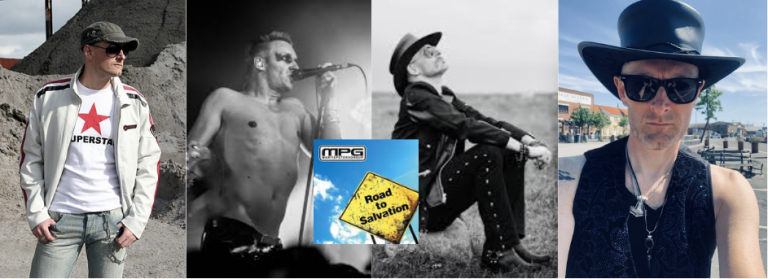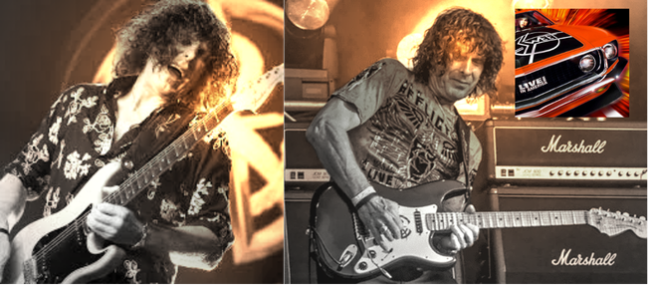
If you’ve been tracking our coverage here at Blast, you already know that the name Heaven & Earth has steadily grown into a powerhouse rock staple. But as lifelong fans of the legendary ’70s UK glam-rock icons Sweet, we were absolutely stoked to learn that key mainstays of the group—founder and guitarist Stuart Smith and explosive drummer Richie Onori—have joined forces with original Sweet bassist and songwriter Steve Priest. Rounded out by powerhouse vocalist Joe Retta and keyboardist Stevie Stewart, this formidable lineup constitutes the newly revitalized Sweet Band.
We caught up with Stuart Smith to get the inside scoop on everything unfolding in their world—from the massive nationwide feedback to the band’s explosion onto the live scene this past year, to their debut collaborative live release, Sweet: Live In America. The record features an electric collection of reimagined Sweet classics, alongside a sneaky peak into the future by way of a brand-new studio track.
Stay tuned as we dive deep into the mechanics of the new lineup, check in on the status of Heaven & Earth, pull back the curtain on Black Star Records, and explore Stuart’s fascinating parallel career as a Special Reserve Officer with the LAPD. First, we look back at the dramatic, unexpected health curveball that shifted his entire career path away from the cockpit and straight toward the stage… We’ll let him take it from here.
Blast Magazine: Stuart, you’ve got an incredible amount of momentum pushing behind you right now. Huge congratulations on the new baby, and of course, on the massive critical success of the live CD!
Stuart Smith: Thank you so much! Yeah, it’s an incredibly busy season for me. There is quite a bit happening all at once right now, but it’s a great problem to have.
Blast Magazine: Let’s start by diving into a bit of your past. Where did the initial spark to become a professional musician actually begin for you?
Stuart Smith: Well, it’s funny because music wasn’t actually the original grand plan. My father was a jet fighter pilot, and growing up, that was really the only thing I genuinely wanted to do with my life. That being said, I’ve had a guitar glued to my hands since I was about seven years old.
Blast Magazine: Was music and guitar something you were constantly surrounded by at home during your childhood?
Stuart Smith: No, not at all. Nobody else in my family played. I just picked it up and did it completely on my own. Oddly enough, my absolute best friend at the time when I was a kid was a guy named Ronald Blackmore. Same exact initials as Ritchie Blackmore, which looking back at how my career unfolded, is a kind of hilarious cosmic coincidence.
Blast Magazine: But flying and pursuing a career as a military pilot remained your primary choice all the way into adulthood?
Stuart Smith: Yeah, absolutely. Becoming a pilot was the absolute dream. I always played guitar in various local garage bands on the side, but my eyes were strictly on the skies. I eventually went to college, applied, and the recruiters told me, “Yeah, your entry grades are definitely good enough, we’ll gladly take you on.” But then they put me through the rigorous physical evaluations, including the specialized aviation medical exams.
That’s when they pulled me aside and said, “Oh, you’re colorblind. You can’t fly by law.” It turns out that a massive portion of the male population—roughly 7 to 8%—is colorblind to some degree, but I had gone my entire life without ever realizing it. I’m actually red/green colorblind. It’s an incredibly slight deficiency in the grand scheme of things, but it’s enough to disqualify you from a cockpit. The way they explained it to me was simple: if I were flying a combat mission and tactical command was shining a red laser onto a hot military target and a green laser onto a civilian school, and I accidentally dropped a missile onto the school because I misread the color hue, that’s simply not going to work.
Blast Magazine: Wow. Yeah, that could have easily turned into a catastrophic problem on a mission.
Stuart Smith: Exactly. So, with the pilot dream completely shattered, I had to pivot immediately. I went over and joined Texas Instruments over in England. I worked for them building and designing microcomputers. I was there for about three months, and my supervisors finally came up to me and said, “Alright, you’ve officially passed your initial probation period with flying colors. We’re ready to officially take you on full-time.” But right as they went to finalize the contract, they gave me the mandatory company medical exam.
They took one look at my file and said, “Oh, wait. You’re colorblind. By law, you are legally restricted from doing this specific microscopic electrical work.” I just stood there completely stunned, thinking, What the hell is going on here?
Blast Magazine: Was computer engineering and micro-circuitry something you had actually formally studied for while you were in college?
Stuart Smith: No, not formally. But because the guitar is inherently an electrical instrument, I had naturally picked up a pretty deep, practical understanding of electronics, amplifiers, and audio signals over the years. However, Texas Instruments didn’t want me working on gear—they put me into an assembly line physically building transistors under high-powered microscopes. Knowing that my vision deficiency meant I had zero long-term future in the building, I walked in and quit the very next day.
I went off, goofed around for a bit, and tried to figure out what was next. I think about three months later I was just sitting there wondering what the hell I was going to do with my life. I was constantly arguing with my dad, who was just as confused as I was because our entire family dynamic had been built around the assumption that I was going to be a jet fighter pilot.
To make matters worse, it was just one of those weeks you usually hear about in old blues songs. During that exact seven-day stretch, I completely totaled my car, and my girlfriend cleared off and left me for my best friend. Absolutely everything went wrong at the exact same time. Feeling completely miserable, I went down to this local bar in Bedford where my parents were living at the time. I walked in, and there was this local band up on stage. I remember it vividly to this day—they were called Spring Offensive, and they were playing jazz fusion, which was the incredibly fashionable, artsy thing in England at the time.
I scanned the room, and sure enough, I spotted my ex-girlfriend sitting right there with my ex-best friend. At the time, I was running a heavier rock band on the side, and as I walked past the stage, the guy in the band said something incredibly stupid through the microphone to mock me. He goes, “Oh look, here comes our three-chord heavy-riff merchant.”
I just completely snapped! I stormed straight up onto the stage, snatched a guitar right out of their hands, turned to the band and yelled, “Good Golly, Miss Molly, go!” and I just unleashed every single bit of anger, betrayal, and frustration that had built up inside me. I had been classically trained on the instrument since the age of seven, and I just absolutely blew that band right off the stage. The audience, who had previously been sitting cross-legged on the floor completely nodding off, suddenly stood straight up and started screaming.
At the end of the song, I stormed back off the stage, sat down in a booth, and immediately had a girl on each side of me buying me drinks. My ex-girlfriend came crawling back saying, “Oh, you know, I really miss you,” and everyone in the room was asking me, “Why on earth aren’t you a professional musician?” On the drive home, I pulled over and just sat in the hills of Bedford looking out over the city lights for about three hours. At three o’clock in the morning, I walked through the front door, woke my dad up out of a dead sleep, and said, “Dad, I want to be a professional guitarist. I do it well.”
Blast Magazine: It was a completely done deal from that exact night on, huh?
Stuart Smith: Absolutely. It changed the entire trajectory of my life.
“I stormed straight up onto the stage, snatched a guitar… and I just unleashed every single bit of anger, betrayal, and frustration that had built up inside me.”
Blast Magazine: Now, how on earth did a professional rock guitarist end up working alongside the LAPD? That is a fascinating parallel career.
Stuart Smith: It really came out of nowhere. I originally got approached by some coordinators about playing in the LAPD Celebrity Golf Tournament. Now, I don’t actually play golf—I haven’t played seriously since I was twelve years old when my grandmother used to take me out. But I agreed to play in it for a couple of years anyway, and through that, I ended up getting to know the Assistant Chief of Police remarkably well. We became very good friends over time.
Then one afternoon, a real-world situation unfolded. I was walking out of a local supermarket into the parking lot, and this ordinary couple walked out right ahead of me. Suddenly, two guys came sprinting out of the store doors behind them, identifying themselves as loss-prevention store security. The female suspect immediately took off running, and one of the guards chased after her. The male suspect turned around and just started brutally beating the crap out of the remaining security guard, knocking him all over the asphalt.
I’ve trained in martial arts for a very long time, so I didn’t even think twice—I stepped in, took the guy down to the pavement, neutralized him, and threw cuffs on him. Because of the police report, my name got heavily flagged in the LAPD computer systems. The command staff looked into my background and said, “Hey, you have a really specific tactical skill set. Why don’t you come down and teach some of this defensive hardware to our active guys?”
So, I started officially teaching them advanced martial arts for self-defense and close-quarters restraint, helping prepare them before they transition into more advanced SWAT training modules. I’ve also put together and performed some benefit concerts for the Los Angeles Police Memorial Foundation.
Blast Magazine: It must be incredibly interesting to mix up your creative life with something that intense.
Stuart Smith: Oh, it absolutely is. It keeps your life balanced in a very strange way. I regular get to go up with the Air Support Division in the police helicopters, actively chasing suspects through the city streets from the air. It definitely keeps day-to-day life interesting!
Resurrecting The Sweet & Tracing the Lineup
Blast Magazine: Shifting back to the music, has the newly reformed Sweet Band been touring pretty extensively since you launched?
Stuart Smith: Somewhat, yeah. Steve Priest called me in January of last year and asked me point-blank, “What do you think about getting Sweet back together?” Right now, all of these classic heritage rock bands are doing incredibly well on the market. Look at what Kelly Hansen is doing fronting Foreigner right now—they are pulling massive numbers and doing fantastic. So, Steve and I decided to give it a shot just to see if the general public was still interested in hearing these songs played live.
It took off like an absolute rocket ship. The entire past year, we found ourselves playing to massive outdoor festival crowds of twelve to sixteen thousand people a night, many of them with us as the primary headliner. We just wrapped up a major festival date sharing the bill with Poison, Great White, and Sebastian Bach.
Blast Magazine: It sounds like an incredibly successful lineup. You mentioned Kelly Hansen earlier—when did you and Kelly first start working together in the studio? What originally brought that connection about?
Stuart Smith: I remember years ago when I was aggressively looking for a definitive powerhouse lead singer for the project that eventually became Heaven & Earth. I called up a close friend of mine who worked as an A&R executive over at Capitol Records. He told me, “Well, you should check out Kelly Hansen. He used to front the band Hurricane.” I instantly remembered their hit song “I’m Onto You” and recalled thinking at the time what an absolute monster vocalist he was.
So, Kelly and I hooked up, and over the subsequent years, we became absolute best friends. He came in and sang his heart out on the first Heaven & Earth album. Right before he officially joined Foreigner, we had just started to get the momentum of the entire project moving. The wheels were finally spinning and it was just about to globally take off, and then right at that exact moment, he got the formal offer to front Foreigner.
Of course, he absolutely had to take it. It’s the ultimate dream gig for a rock singer, and the financial side of it was obviously going to be life-changing for him. So he took the gig, and I was left struggling behind trying to find the right replacement singer to maintain our momentum.
Blast Magazine: You’ve shared the stage with several legendary rock vocalists over the course of your career. Was there someone specific you had in mind to step in immediately after Kelly left?
Stuart Smith: For a while, I brought in Keith St. John, who had been working with Doug Aldrich on the Burning Rain project. But it was just incredibly difficult. We had spent all this time building up this massive collaborative momentum, and then the structural pieces just fell to bits.
But when Steve Priest called me out of the blue last January wanting to get Sweet operational again, we decided to give it a real run. Because of my years in the industry, I had a massive rolodex of musicians, so I just started making calls. The first person I dialed was Richie Onori, who I had played with extensively in the past, to handle our drums. Then I brought in Joe Retta on lead vocals, whom I had casually jammed with a few times. Joe turned around and recommended Stevie Stewart to handle our keyboards. The very first time we put that specific line-up together in a rehearsal room, it was just pure magic. The chemistry was instantaneous. We started playing, the dates started booking, and it’s been fantastic ever since.
Changing Demographics & The Corporate Shift in Music
Blast Magazine: When the media refers to classic rock bands regaining massive popularity with their “second comings,” they are usually talking about the neon ’80s hair metal bands. But Sweet reaches back quite a bit further into the heavy ’70s and late ’60s glam eras. What are you seeing firsthand regarding the age demographic turning out at these live shows?
Stuart Smith: You know, it has been absolutely mind-blowing. At least half of our active audiences every single night are kids between the ages of twelve and twenty. They are packed tight against the barricade down in the front row, and they know the lyrics to every single song just as well as we do—in some cases, even better!
And they aren’t just singing along to the massive radio hits like “Little Willy,” “Fox On The Run,” or “Ballroom Blitz.” They are down there screaming the words to deeper album cuts like “The Six Teens,” which was never a massive commercial hit in the States. They are holding up massive handmade banners that say “We Love Sweet.”
Blast Magazine: That is incredible. To have a project restart after a long hiatus and immediately bridge multiple generations right out of the gate is rare.
Stuart Smith: Yeah, and I honestly think a massive reason for that is because there is simply nothing else out there for them in the contemporary market. It’s not like when I was growing up, where you had these towering, god-like musical figures to look up to and emulate—people like Jeff Beck, Ritchie Blackmore, Ian Gillan, Paul Rodgers, and Jimmy Page.
Blast Magazine: Yeah, the modern mainstream rock landscape has gotten pretty barren.
Stuart Smith: It really has. It’s tragic. There is virtually nobody who has broken through into the mainstream since the alternative rock explosion started who is going to be genuinely remembered and revered the way those classic guys were purely as master musicians.
The entire mechanics of the music industry have completely changed. The labels are entirely run by corporate lawyers and accountants now. It is strictly a numbers and money thing. I mean, one of the major labels recently brought in the former CEO of Coca-Cola to run their entire music division! It’s like, what on earth does a soft drink executive have to do with the heart and soul of musical artist development?
The old days are completely dead where a labels executive would discover a raw band, see their long-term potential, and spend three albums developing them. You don’t have that safety net anymore. And it’s the exact same problem with modern concert promoters. Everyone wants you to come to them as a fully pre-packaged commercial item. They want you to have recorded the entire album yourself on your own dime so they don’t have to risk giving you an advance, and they expect you to bring a pre-built fan base, while they do diddly-squat for actual local promotion.
Obviously, the labels got severely hurt financially by the digital downloading boom, but the reality is that they didn’t get on the ball fast enough to adapt.
“Fame has become a currency in the United States more than anything else, and it really pisses me off.”
Furthermore, because of home computers and modern recording software, every studio is running Pro Tools now. We get people coming into our studio who completely, utterly suck. I’ve heard tracking sessions that are just horrific, and the engineers will just shrug and say, “Don’t worry about it.” They’ll just have the computer manually shift the drums into perfect time, snap the guitars into place, and use software to perfectly pitch-correct the singer’s voice.
Whether it’s Ashlee Simpson or Paris Hilton, they can’t sing to save their absolute lives. Fame has become a transactional currency in the United States more than anything else, and it really pisses me off. Especially when you have Hollywood actors who suddenly wake up one morning and decide, “I’m going to be a rock musician now.” I mean, you have a very select few who actually have the raw talent to pull it off, but then you have people like Steven Seagal who just happen to have the personal wealth to hire the absolute greatest session backing musicians on the planet to cover for them.
There are so many bands putting music out, but it is incredibly rare that I hear anything genuinely great. A couple of the newer rock bands, like Hinder, seem pretty good, but you certainly don’t have a modern Jimmy Page or Paul Rodgers emerging from that pack. When I go out to concerts by newer bands, there is just no “Wow, this guy is absolutely blowing my mind” feeling. That jaw-dropping virtuosity just doesn’t exist in the mainstream.
But I think a lot of kids today are growing up with parents who constantly play classic rock around the house, so they get interested and start picking up instruments. Then they try playing some of the modern stuff on the radio and realize, “Wow, this stuff completely sucks, it’s way too easy.” So they start diving backward into the catalogs of Led Zeppelin and Deep Purple and say, “Hey, this is real musicianship!”
Games like Guitar Hero and Rock Band have also played a massive role in turning the younger generation on to classic rock. They want real playing, not computers doing 100% of the heavy lifting and lawyers running the venues.
We played The House of Blues the other day. In the old days, a local promoter would be physically standing at the venue during the show. He would watch the crowd’s reaction and say, “Well, it didn’t completely sell out tonight, but the people who came had an incredible time. They are going to go home, tell all their friends, and they’ll buy tickets next time. Let’s develop this act.”
Today, Live Nation runs half of the live venues in the entire country, and their promoters don’t even bother showing up to the venue. They literally just log into a computer the next morning and judge the band’s value solely based on the hard ticket percentages and concession figures. I don’t know where the future of music is headed. There is just an alarming lack of raw talent being pushed, and that deeply distresses me.
We were incredibly lucky growing up. We had Clapton, Beck, and Blackmore. Then a little later on, Eddie Van Halen came along and did something entirely revolutionary with the mechanics of the guitar. After that, you had Slash, who wasn’t necessarily changing the technical approach to the instrument, but remains an undeniable, brilliant player. But that was essentially the end of the line. After that era, real mainstream virtuosity and an absolute command of the instrument just died out.
That’s why playing with Sweet is so great. Every single guy in this band is so damn good at their instrument that we can just completely go off on musical tangents live on stage. It’s an amazing trip and a lot of fun. Plus, the music is inherently joyful. Heaven & Earth was a very serious, intense band—I don’t think we had a single “good time party song” in our entire live set list.
Balancing Heaven & Earth with Sweet’s Legacy
Blast Magazine: The Heaven & Earth records were absolutely incredible, though!
Stuart Smith: Yeah, I think the music we made was genuinely great, and it was deeply fulfilling for me personally because I got to do a massive amount of heavy guitar work on those tracks. With Sweet, you are playing much more of a straightforward, rock ‘n’ roll, three-chord type of structure. But the songs themselves are incredibly well-crafted pop-rock gems.
When I do get the opportunity to stretch out and rip a proper solo—like in “Windy City” or “Set Me Free”—it is an absolute blast. Because of the size of the audiences we are pulling in now, we are selling out venues across the country. At the end of my solo in “Windy City,” I’ve actually been able to get a full standing ovation from the crowd. It is incredibly difficult to get a rock audience to stand up and start applauding furiously halfway through a song during an instrumental break. So I’ve kept a couple of specific songs in our live set that allow me to show off, but everything else is locked down tightly. For instance, on “Fox On The Run,” the solo is completely iconic and set in stone—there isn’t much room to alter it. Once you learn it note-for-note, that’s what you play. But with the deeper tracks, I get to free-form and jam, which I absolutely love doing.
Blast Magazine: Now that the live CD is officially out in stores, are you guys actively writing new studio material?
Stuart Smith: We are actively working on brand-new material right now. I am really pleased with how the writing is coming together, and the band is just firing on all cylinders. Everyone gets along incredibly well behind the scenes, so we have zero ego problems to deal with. It works perfectly because every single guy is a top-tier musician.
Blast Magazine: I have to ask—isn’t there technically another band currently touring Europe using the name Sweet?
Stuart Smith: Well, yeah. There is Andy Scott’s version. Andy wasn’t the absolute original guitarist for the band—there were actually three players before him—but he was there for the entire commercial heyday and he co-wrote a lot of the catalog. In fact, he wrote “Love Is Like Oxygen,” so he’s out there touring. But he hasn’t come over to the United States to perform at all. He has been playing basically just around Europe, and his set list leans heavily into the very early, pop-oriented material like “Poppa Joe”—stuff that we don’t really touch at all.
“Wig-Wam Bam” and “Little Willy” are about as far back into the bubblegum era as our lineup will go, simply because the American crowds demand to hear those songs. Sweet’s music has been licensed a lot lately for major television commercials, and they have that new TV series Life on Mars—which is about a modern detective who gets knocked back in time to the 1970s—and they play a ton of Sweet tracks on the soundtrack, including “Little Willy.” So it’s brought the music back into the cultural ethos, which is a lot of fun.
With Heaven & Earth, the vibe was just vastly more serious. One of the single greatest things that Ritchie Blackmore ever taught me when I was young was about the philosophy of playing a guitar solo. He told me, “When you are preparing to play a solo, look at what the lyrics of the song are actually about. If the song is about being angry, heartbroken, or completely depressed, you need to mentally put yourself back in time to a specific moment in your own life when you felt that exact emotion, and focus entirely on that memory while you play.” It’s a lot like method acting for guitarists.
Because of that approach, the Heaven & Earth songs were always a bit dark, particularly when you compare them to the Sweet catalog. With Sweet, there isn’t a single serious song in the entire set—it’s entirely good fun, a total party band. By the third song of our set, the entire venue is up on their feet dancing. It’s a completely different energy than Heaven & Earth, and honestly, a lot more fun on a nightly basis.
Heaven & Earth was a constant, exhausting uphill struggle for me. I was trying to break a brand-new melodic rock band in a modern industry environment that only cares about trendy indie kids with internet followings. The people who were genuinely into Heaven & Earth were closer to my own age, and they have jobs and families—they can’t easily come out to a rock club at midnight on a Tuesday. But Sweet already has the built-in legacy, so it’s drawing massive crowds right now. We’ve started writing new material, and we actually included one brand-new song on the live album called “Sweet Dream.” It’s a gorgeous power ballad that Steve Priest wrote, and it shows the fans that we aren’t just standing still—we are actively planning to move forward.
Recording Logistics & The State of Record Labels
Blast Magazine: Where was the Live In America album actually tracked?
Stuart Smith: It was recorded live at a casino showroom up in the Palm Springs area. We did two full shows back-to-back that specific night, so we figured it would be the perfect opportunity to multi-track the audio and just take the absolute best performances between the two sets.
Blast Magazine: Are there any immediate plans to release a companion live DVD from those shows?
Stuart Smith: We are actively working on editing that together. We actually shot high-definition video footage the exact same night we recorded the audio. We recently struck a digital distribution deal with K-Tel where they were granted the rights to four core tracks: “Little Willy,” “Fox On The Run,” “Love Is Like Oxygen,” and “Ballroom Blitz.” They’ve put those video performances up on iTunes as downloadable video podcasts. If that pilot program performs well financially, we’ll probably finish post-production on the rest of the multi-cam tracks like “The Six Teens” and put out the full concert. Hopefully, sometime later this year, we can find a great venue with a massive lighting rig that we really love and shoot a proper, standalone live DVD.
Blast Magazine: Do you think you will ever do any future studio work under the Heaven & Earth moniker?
Stuart Smith: One day down the line, I may very well do another Heaven & Earth album. But it will strictly be a matter of timing when I have a clear gap in between my primary touring commitments with Sweet. I am constantly writing new guitar solos and riffs at home, and I have a massive backlog of songs that simply don’t fit the musical style of Sweet. I’ve just sort of stored them in the back of my mind for safe keeping until the time is right.
Blast Magazine: Was Kelly Hansen the primary singer who handled the live touring duties for Heaven & Earth back in the day?
Stuart Smith: Kelly was the main guy, yeah, right up until he landed the Foreigner gig. We originally started the band with Kelly, and we got signed to Frontiers Records over in Europe. They flew us over to England to perform at The Gods Festival.
The single most frustrating thing happens immediately after we step off stage from our set: the head of the label walks straight past me, goes up to Kelly, and offers him a record deal to put his old band Hurricane back together! I was absolutely furious. I was like, “How dare you do that right at our gig?” Of course, Kelly understandably took the deal.
So for the second album, Windows to the World, I brought in Kelly Keeling. He is an incredible singer who can masterfully mimic almost any vocalist on the planet, but I don’t think he has ever truly discovered who he is as an individual artist, even though he’s a phenomenal musician. We recorded the album and started hitting the road to tour, but then internal friction started developing. He wanted to start playing guitar on stage, and if the band didn’t immediately accept every single musical idea he brought to the table, it turned into a bad situation.
After that, we had Paul Shortino in the lineup for a very brief window, but that unfortunately didn’t pan out well either.
Blast Magazine: That is such a shame. Shortino’s grit fit those specific songs incredibly well.
Stuart Smith: Yeah, it really did, and it was a massive shame because Paul is genuinely one of the absolute greatest rock singers on the planet. But the music industry is a constant, shifting battle. It always comes down to finding the perfect singer, which I originally had in Kelly Hansen.
Joe Lynn Turner and I also went out on the road together for a brief run. But at the end of the day, you have to have a real financial engine operating behind a band to ensure that professional musicians can actually afford to stay in the lineup if music is how they pay their bills. We also worked with Keith St. John, but again, it felt like pulling teeth trying to get the general public off the ground over here. Nobody in America wanted to hear about new melodic rock acts. We were always significantly bigger over in Europe and Japan.
Blast Magazine: Yeah, the international market has always been more loyal to melodic rock. But even over here in the States, your records still carry a massive reputation among die-hard classic rock fans. It’s one of those debut albums you can just put on and never get tired of hearing.
Stuart Smith: It really was an absolute magical era recording that first record. The studio environment was incredible. We just had this amazing revolving door of talent coming through. We had Howard Leese from Heart, our brilliant producer Pat Regan, and myself. At the time, I was living up in the Hollywood Hills. We would track late into the night, and the moment the bars down on the Sunset Strip officially closed at two in the morning, all of these famous local musicians would drive straight down to our studio because they knew we kept the rooms stocked with booze and they could keep drinking after hours. They would hang out, get loose, and we’d throw them in front of a microphone to lay down massive background vocal tracks. It was an incredible way to make a record.
Blast Magazine: Did your mentor Ritchie Blackmore have a hand in writing any of that material? He didn’t actually play on the debut, correct?
Stuart Smith: No, he didn’t play on the first one. Back in the early ’80s when I was still living in England, the local music scene was entirely dead for guitar players—it was all New Wave, Duran Duran, and synth-pop. Ritchie had just hired Joe Lynn Turner into Rainbow, and they had just scored a massive hit with “I Surrender.”
Ritchie sat me down and said, “Look, you need to pack up your bags and move to the United States. The country is so physically massive that there are enough fragmented pockets of fans that even if your specific style of music isn’t currently in fashion on the radio, you can still carve out a real career.”
So I listened to him. I flew over to Long Island and lived at his house for a while. Then I got my own apartment, and eventually moved out to Los Angeles in 1986 and I’ve been based there ever since. There are so many phenomenal musicians from that classic era still living out here, but you have to have a real financial infrastructure to make a touring band viable. By the time you factor in flying band members out, paying a professional road crew, hiring a merchandise manager, and booking hotels—it takes a massive amount of capital to put a band on the road. With Sweet, the promoters will gladly pay top dollar up front because the band has the legacy name, the jukebox history, and the catalog of hits that guarantee bodies in the seats.
Blast Magazine: Are you still actively operating your independent label, Black Star Records?
Stuart Smith: No, unfortunately not. We launched the label right as the digital downloading boom started causing the entire traditional record industry infrastructure to crash. Every major label went into a tailspin.
Nowadays, modern record companies basically expect you to hand them a completely finished, mastered album for absolutely zero advance, and then they just dump the files onto iTunes and Amazon and hope for the best. We can do all of that digital distribution ourselves from a laptop without giving away our rights. There are virtually no physical record stores left on the street corners anymore, so running an independent record label is simply not a venture I’m willing to lose money on right now.
It’s a real shame because we had signed Howard Leese, who made an absolutely brilliant solo album. But as things started collapsing with the business, I chose to completely give him his legal rights back for nothing because he is one of my absolute best friends, and I didn’t want his music tied up in a failing system. I wanted him free to find a functional label that could do something real for him.
Blast Magazine: It would have been nice to have an authentic label out there actively encouraging the younger generation of players to set some real musical standards for themselves.
Stuart Smith: Oh, absolutely. There are still a very select few indies out there prepared to do that. But I absolutely despise the modern trend of sending MP3 files back and forth. When we finished mixing the new Sweet album, the executives said, “Great, email us the MP3s.” I absolutely hate that.
Real rock music needs to be played incredibly loud on a high-fidelity sound system—ideally blasted in your car. I always insist on waiting until I can hand someone a physical CD. I want them to experience it in their vehicle where they can feel the low end, rather than listening to a compressed file on tiny, tinny little desktop computer speakers while they sit at their office desk. That doesn’t do a great record justice.
Geopolitics, The LAPD, and Formative Years
Blast Magazine: We rarely get to see you guys tour out on the East Coast. Are you planning to keep the band strictly inside the United States for the foreseeable future?
Stuart Smith: For right now, yes. We do have a massive collective desire to get over to Europe. Andy Scott has done a very good job of keeping the Sweet brand alive over there on the touring circuit, though I’m not entirely sure how well received his specific direction is. Like I said, his lineup plays a lot of the early pop stuff like “Poppa Joe,” whereas our lineup is a much harder-edged, driving rock band. We focus heavily on the heavy B-sides of the Sweet catalog.
When Sweet first broke, I remember hearing “Wig-Wam Bam” on the radio in England and thinking, What on earth is this rubbish? At the time, I was heavily into deep, heavy bands like Deep Purple, Led Zeppelin, and Cream. Then a buddy of mine came over and said, “Hey, you need to listen to the flip side of this record.” I put it on and was completely blown away. I asked, “Who on earth is this?” and it was Sweet! It was “Set Me Free,” which was originally just tucked away as a B-side.
That incredible musicianship is how I originally fell in love with the band. But they had already started down that commercial glam road. In England, they had that massive television show Top of the Pops. Sweet was on there constantly alongside David Bowie, T-Rex, and Slade, and all of those bands were constantly trying to outdo one another to see who could be more outrageous and ridiculous with the makeup and the glam costumes. Because of that visual spectacle, Sweet got unfairly saddled with a superficial bubblegum stigma. Meanwhile, bands like Deep Purple could walk out on stage in ordinary street clothes and be taken completely seriously as artists. Sweet never truly received the historical credit they rightfully deserved as elite musicians and masterful arrangers, because they literally engineered that entire heavy, multi-part vocal harmony rock sound. Without Sweet’s blueprint, there would have been no Def Leppard and no Queen.
But anyway, yeah, this current tour is our very first real run into this side of the country. Last year was spent strictly doing isolated outdoor festivals. The other major hurdle with these shows is that the general public doesn’t always connect the songs to the band’s name. They know “Ballroom Blitz” instantly, of course, but that’s often it. You will literally have people in the audience who think “Love Is Like Oxygen” was recorded by Electric Light Orchestra!
We’ve had promoters book us for massive outdoor shows—like a recent festival date in Michigan where Grand Funk Railroad was headlining. After the show, I was having a drink with the primary promoter, and he looked at me and said, “Man, I messed up. I should have had you guys headlining tonight. I knew every single song in your set list, I just had no idea all of those hits were written by Sweet!” So it’s a bit of an educational building process right now. We are working hard to re-educate the public that these massive anthems belong to Sweet.
The radio stations have been very supportive of us, but traditional radio is in massive corporate trouble right now. Look at Clear Channel facing severe structural issues, which honestly is a good thing for the music industry. It got way too big and monopolized, and it’s likely going to get broken up into smaller, localized stations again.
The corporate classic rock radio format has become an absolute nightmare because these stations play the exact same two hundred songs on a rigid loop over and over again. There is a massive wave of killer new rock music coming out of Europe constantly, including the Heaven & Earth records, but you cannot get it on the airwaves over here.
Blast Magazine: It’s incredibly frustrating because tracks like “Don’t Keep Me Waiting” would absolutely explode on the radio if given a chance.
Stuart Smith: Exactly! Kelly Hansen sings his absolute heart out on “Don’t Keep Me Waiting,” but the corporate programmers refuse to play it. Even when massive, stadium-level classic rock acts like Def Leppard or Bryan Adams put out brilliant new studio albums, the radio stations completely ignore the new material and just keep playing the exact same legacy tracks from twenty-five years ago. It has to be incredibly discouraging for the veteran artists who were there during the heyday and have never stopped writing great music, only to find there is no media outlet willing to push it. So hopefully, when we drop our new Sweet studio material towards the end of the year, the landscape will have shifted a bit. It took Foreigner a year and a half after hiring Kelly to layout the groundwork and get the public paying attention again.
Blast Magazine: Foreigner actually integrated their new track “Too Late” into the live set recently, and the crowd response has been phenomenal.
Stuart Smith: Yeah, that is a fantastic song. But they’ve been touring relentlessly for three solid years to get back to that level where the casual public takes notice. Our version of Sweet has been operational for less than a single year, and the progress has been staggering.
I think when the new studio album officially drops, people are going to be surprised by the direction. We are leaning heavily into the heavy, hard-rock edge of the band’s history—tracks in the vein of “Set Me Free” and “Windy City,” alongside the power ballad Steve wrote called “Sweet Dream.” We want to explicitly prove to the audience that we are not a stagnant nostalgia act; we are actively moving forward as creative musicians. We did our very first live show in June of last year, and we’re just getting warmed up.
Blast Magazine: Are you involved in any other musical side projects or studio work while balancing the Sweet calendar?
Stuart Smith: I honestly do not have a single second of free time right now. Every single ounce of my creative energy is being poured into Sweet. We are genuinely having the time of our lives out here.
It can be so profoundly disheartening when you pour your soul into a project like Heaven & Earth, you fly into a city to play a club, and only thirty die-hard rock purists turn up to watch you play. Whereas with Sweet, we are walking out onto festival stages in front of thousands of screaming fans who love this music.
Blast Magazine: There must have been a massive cultural difference between the crowds in the States and Europe regarding the Heaven & Earth material.
Stuart Smith: The reality is we only ever made it across the ocean one single time as a band, which was to perform at The Gods Festival. That run was handled by Frontiers Records, who are completely based out of Italy. I told the label executives repeatedly, “Look, you guys desperately need to align yourselves with proper European touring promoters and put together a massive, package package-tour featuring multiple Frontiers artists.”
When we hit the stage at The Gods Festival with Kelly Hansen on vocals, we absolutely killed it. We blew the room away. But it was just one single isolated show, and then we were flown right back home. It was a massive failure of execution on the label’s behalf—they completely failed to build relationships with the local European promoters to keep us on the road. It was incredibly frustrating, but that’s just the nature of the music business. Especially right now, with the global economy being in absolute shambles.
Blast Magazine: Yeah, the economy has certainly seen better days.
Stuart Smith: It’s a complete mess right now. Ever since the tragedy of 9/11, the world has been spinning out of control. There are so many wild conspiracy theories floating around out there that it’s impossible to know what to actually believe. Look at why on earth we went into Iraq in the first place. Saddam Hussein was just a loudmouth dictator; he wasn’t an imminent danger to the United States. There were absolutely zero weapons of mass destruction found over there.
I mean, I have enough military proximity to know that while you could see trucks rumbling across the desert on satellite photos, you cannot tell me those were mobile biological weapons labs. There were zero reliable spies on the ground, zero accurate intelligence. If you take ten minutes to actually study world history, Iraq has historically been a volatile region comprised of warring tribal factions. The only way it ever stayed stabilized was when one ruthless dictator rose to power, terrified the population, and kept everyone strictly in line. Baghdad was a completely functional, peaceful city before the Western military intervened. We went in, removed the one guy keeping the lid on the pressure cooker, and now all of those factions are at each other’s throats and ours. It’s just like the history of Ireland—at the end of the day, it all boils down to money and resources.
And look at what happened with 9/11 regarding Flight 93. We absolutely shot that plane down. I am the son of a professional jet fighter pilot; I know exactly what a tactical missile strike looks like on a target. And the reality is, we absolutely had to do it. It’s entirely understandable from a national defense perspective—a commercial airliner has been hijacked by terrorists, communication is dead, and command has zero idea where it’s heading.
But the cover stories they came up with afterward were just ridiculous. I mean, have you ever tried to get a stable cell phone signal from a commercial airliner flying at altitude? It is technically impossible! Furthermore, they found one of the plane’s engines resting eight miles away from the primary crash debris field. A heavy jet engine can bounce maybe half a mile upon high-speed impact, but when it is discovered eight full miles away, that means the aircraft was struck by a missile in mid-air and the engine tore off before it hit the ground. There was also a plain white F-16 fighter jet with zero military registration markings spotted circling the airspace by locals at the exact time of the crash.
It would have been infinitely better if the government had just stepped up to the microphone and been completely honest with the American public. If they had just said, “Look, we were faced with an unimaginable crisis, the plane was heading for a major population center, and we had no choice but to shoot it down to save thousands of lives,” the public would have deeply appreciated the honesty. But coming up with a fabricated story just makes every other piece of official intelligence look completely suspect. They used that tragedy as an excuse to invade Iraq, when there wasn’t a single Iraqi national involved in the hijacking plot—they were almost entirely Saudis!
Invading Afghanistan was completely understandable and justifiable, and we had the unified support of the entire civilized world behind us. But pivoting to go into Iraq completely drained this country’s financial resources, not to mention the thousands of brave men and women who have been killed in action, plus the massive loss of innocent Iraqi civilian lives. The world is a complete mess right now. I sincerely wish President Obama the best of luck; I genuinely like the guy.
Blast Magazine: Are you confident in the political direction the administration has taken so far?
Stuart Smith: Honestly, I think it’s still far too early to tell. He is still buried under the monumental task of trying to clean up the massive economic and geopolitical mess this country was left in. But at the end of the day, I’ve managed to find a small corner of the world that works for me, and that corner is music. I love playing it every single day.
It’s the exact same perspective with my work alongside the LAPD. The older you get, especially now that I have a young child of my own, you start to look at society entirely differently. When you are a young, rebellious kid playing in rock bands, you look at the police as the ultimate enemy. But as you mature, you realize that regardless of your personal political opinions on foreign wars, the true first line of defense for your homeland security belongs to the local men and women in uniform. You come to view the badge with immense respect.
When you get to know these officers personally, go out on active ride-alongs with them, and see firsthand the absolute psychological abuse and danger they have to endure every single night just to keep the peace—it changes you. These guys walk out of their houses every single shift knowing there is a real chance they might not be coming home to their families. So from that perspective, I am incredibly proud to step up and help out the department wherever I can. I obviously can’t commit to being a full-time officer, but I absolutely love doing my part.
Blast Magazine: At what age did martial arts first become a serious interest for you?
Stuart Smith: I first started training when I was eleven years old.
Blast Magazine: Advanced martial arts training, classical guitar, and military fighter jets—that sounds like an incredibly well-rounded childhood.
Stuart Smith: Well, because of my father’s military career, he would get officially posted to a completely different military base every two years. Our family was constantly packing up and moving, and my dad started worrying that my formal education was severely suffering from constantly switching schools. So when I turned eleven, they sent me off to a strict boarding school. At the time, I was incredibly small, scrawny, and skinny, and I became an immediate target for the bigger kids who loved to pick on me. Right around that exact same time, I saw Bruce Lee on a movie screen for the first time, and…