By Meri Ballou
Blast Music Coalition
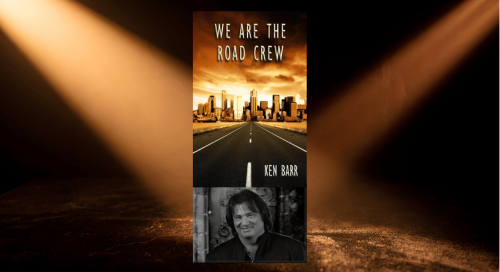
Following the tremendous feedback to our look behind the scenes into the music industry and concert experience, we continue the segment from the viewpoint of veteran professional Ken Barr. Ken is a longtime right hand for multiple top-charting artists—from Debbie Gibson and Stone Temple Pilots to KISS and Alice Cooper—as well as a technical director and special events coordinator for one of America’s leading theme parks, and author of the book ‘We Are the Road Crew’. Read on to check out Ken’s perspective on life on the road and more in this firsthand account.
Blast: Hi Ken, I’m sitting here looking at your many areas of work, and it looks like you’ve got your hands pretty full.
Ken Barr: Yeah, I stay pretty busy. I’m definitely not getting bored.
Blast: So, in addition to being an author and screenwriter, you’ve also been involved with projects at SeaWorld Orlando for quite a while as a technical director, stage manager, and special events team coordinator, as well?
KB: Yeah, we do a bunch of different types of events. We do Bands, Brew & BBQ, which features country and classic rock and runs there for four weekends. We also do special events for corporate buyouts where they’ll bring an artist into one of our theaters, and I’ll oversee that type of thing. It’s cookie-cutter in one respect, but every single show brings its own wrinkles and things you have to deal with. You go in knowing what you have to work with because it is corporate, but everything tosses you a curveball here and there. And that’s what I live for—the curveballs.
Blast: Sounds like a lot of work on top of being an author and filmmaker. Speaking of which, We Are The Road Crew is awesome. I’m looking forward to sharing it with our readers; I’m sure they’ll find it as interesting a read as I did. In fact, we recently launched another side to our interviews with a good friend of mine, concert promoter Mick Treadwell, as part of a behind-the-scenes series that the readers have really responded enthusiastically to. Because of that, I’m really looking forward to hearing the feedback on your input.
KB: Oh yeah, there’s a whole other aspect to it. With the technology we have now and some of the incredible people doing these shows, the folks who design and build the sets out there every day are just amazing. You’ve got people who have the skills to be engineers building actual bridges, but they choose to work in rock ‘n’ roll instead. There is just so much hidden talent out there that the average person doesn’t realize is there. You know, people go to a show and enjoy it, but they don’t realize that there are another eighty guys back there behind the scenes making what they’re seeing happen on stage. It’s a great thing to let people know about that side of it, because there are a million stories out there.
Blast: Yeah, you know, I watched U2 go up out in Vegas a couple of years ago. I’m fairly familiar with the process, but it was still pretty amazing to watch what went into putting that massive show together and tearing it back down. Just watching the stage go up alone was pretty intense.
KB: I don’t know how familiar you are with legendary road crews, but guys like Jake Berry and Charlie Hernandez are legendary production managers—absolutely top of the heap as far as anyone on the road goes. I worked for Charlie back in ’92 on KISS, and it was like nothing you’ve ever seen before; those guys are just so amazing. When you’re coordinating fifty or sixty semi-trucks, unloading them, and getting the gear out there, you’ve got two or three stage managers, a full road crew, and a full local stagehand crew. It’s an army.
Then there’s the coordination of the talent itself. If you don’t have everybody working together at the top of their game all the time, it just isn’t going to happen. People really just don’t understand how much logistics are actually involved in a successful rock show.
Blast: And one thing I didn’t realize prior to my interview with Mick is that when you’re working at that elite level, these production managers are often working on more than one tour at a time. They have to be available to multiple camps, not just the people they are physically on-site with at the moment.
KB: Yeah, there are production guys out there who will handle two or three tours simultaneously, and they’ll manage the whole thing by phone, which is incredible. They are relying heavily on a really strong assistant production manager or a top-tier stage manager on the ground. It’s all just one giant network.
Blast: Kind of redefines the whole concept of organizational skills.
KB: Yeah. I’ve been off the road for almost eleven years now, and I really do miss all that heavy coordination and everyone working together as seamlessly as they do.
Blast: Do you ever get out there on the road at all these days?
KB: I haven’t lately. I’ve been heavily focused on family and my current work here in Florida. Though, I’ve actually been offered a gig recently that I’m contemplating, which might have me back out on tour this year. I’m still thinking about it. Part of me really wants to stay home and keep writing, and another part of me really misses the road. You’re always torn between loving what you do now and what you used to do, so we’ll see what happens.
Blast: How did you first break into the industry, and how long did you end up doing it?
KB: Well, I started playing in bars back in high school around 1978, and I was a really, really bad guitar player. I lived on the eastern part of Long Island, and back then it was not built up at all. The way it worked was there were maybe three local bars where you could play or see the bands that were around. If your band wasn’t playing that night, you’d go help your friends set up their gear just to get into the venue for free. That was how it started for me.
It didn’t take me long to realize that I actually preferred setting up the gear over playing. Back then, I didn’t even realize that official positions like guitar and drum techs existed because the industry was still young and the club level I was on was so basic. I was fifteen when I started, and my last official tour was the Alice Cooper Brutal Planet tour in 2000—so twenty-two years total. I had a lot of fun, worked with a lot of great people, and it was just something I sort of fell into. I never realized it would become a lifelong career; it started out as just fun, extra money, and I always kept a day job when I was working the local clubs. Where I lived, the club circuit was so massive with people going out seven nights a week that you could actually make a great living just working them. Eventually, I graduated to the level of national touring artists and got out on the road.
Blast: I think it’s a completely different scene for musicians and crew trying to make a living doing the club thing nowadays.
KB: Well, when they raised the drinking age to 21 back in 1986 on Long Island, the club scene just dried right up overnight. The police started hammering the clubs when that happened, and it completely altered the nightlife. The ’70s and early ’80s were really the golden era for the local rock scene on Long Island.
Blast: So when you first stepped up to the touring level, what were you doing and who were you working for?
KB: I started out as just a general roadie. I was stacking PA speakers and setting up light trusses. In the club scene, I had done sound for a while, so you learn to be a jack-of-all-trades just to keep yourself working. You learn live audio, you learn how to tech and repair instruments. My first official tour where I could finally quit my day job was doing drums and percussion tech work for Debbie Gibson back in the late ’80s. I started out just working weekends with her because she was still in high school at the time. When the full tour finally launched, I was asked to jump on, which was incredibly fortunate for me. That was my first real break in the big leagues. From there, it was just a matter of working hard and meeting people, which naturally led to the next tour, and twenty years later I was still out there.
Blast: So you’ve pretty much covered the entire spectrum genre-wise, spanning from bubblegum pop to classic rock and heavy metal.
KB: Yeah, I’ve worked with KISS, Alice Cooper, Rainbow, Stone Temple Pilots, The Bangles, and a ton of one-off gigs like televised award shows. When I lived in New York, I used to get called in to tech on shows like Conan and Letterman if a musical guest rolled in without their own crew. Because I had such a diverse technical background, it really helped me fall in anywhere. I could just jump into any camp and get the job done no matter what the gear was. I focused hard on the heavy metal club circuit when I was a kid to become a really sharp guitar tech, but then my very first real tour ended up being drums and percussion, where I was given the opportunity to learn on the fly. Armed with both skills, I was never pigeonholed into just one job.
Blast: Is there one specific band or experience that stands out for you above all the rest?
KB: Well, as a kid, I was a massive KISS and Alice Cooper fan going back to when I was about seven years old. To be able to grow up and work for both organizations was incredible. When you work for the Alice Cooper camp, you realize they are the most loyal people in the business. If you worked the last tour, you are automatically the very first person they call for the next leg. They were so good to me for so many years.
I have to say the exact same for the KISS guys, too. On top of being a KISS fan, I was a huge comic book nerd, so having the opportunity to sit down with Gene Simmons and just talk about comic books was awesome. One of the biggest surprises of my career, though, was when I worked for Air Supply. We started out in the States playing small dinner theaters and clubs. But then you fly over to the Philippines, China, and South America, and suddenly you’re playing massive outdoor stadiums. Those guys are treated like The Beatles over there—you’ve got fifty thousand people singing every single word to every ballad. I was only about 24 at the time, doing stadiums with Air Supply, who, by the way, were some of the coolest, most down-to-earth guys on the planet. They are actually the ultimate rock stars, believe it or not.
Blast: They have some seriously cool songwriting and vocal harmonies. I still listen to their stuff today, and they are incredibly well-respected by everyone from pop artists to metalheads.
KB: Yeah, they are two amazing voices with great songwriting, and there’s just nothing bad there at all. I actually wasn’t a fan when I was first hired, but I became one very quickly and I still am.
Blast: The other great thing about that specific era is that music felt so much more universal. You could turn on the radio and hear Air Supply back-to-back with Def Leppard, Mötley Crüe, or Michael Jackson. There was a much wider acceptance of a multi-genre approach on the airwaves compared to now. Top 40 truly included everything.
KB: Yeah, absolutely. Even something completely out of left field like the Fine Young Cannibals would sit right there in the Top 40 next to heavy rock tracks.
Blast: It was a whole different standard for mainstream music back then. So, what finally made you walk away from life on the road? It sounds like you genuinely loved it.
KB: I did love it, but family eventually became my main focus. I got married in 1994—I literally flew home for three days, got married, and immediately flew right back out to rejoin the tour. It is incredibly difficult to sustain a healthy family life when you live on a tour bus. In 2000, at the end of that touring cycle, I made the firm decision to retire from the road and try something new. You always miss the work, but there are a lot of guys out there with horror stories about getting divorced, staying out there way too long, and just hitting a wall of total burnout. I wanted to leave at the top of my game on a high note.
In the years since, I came home and channeled that energy into my community. I got involved in local politics, lobbied for nine years to get a public dog park built in the town I live in, and did a lot of civic stuff alongside my creative projects. You just have to channel that road-crew hustle into things that still make you feel good about getting up in the morning.
Blast: How did you end up down in Florida?
KB: It was part of our master plan. You know you have to land somewhere stable when you transition off the road, so you look at where the steady industry opportunities are. I was working gigs at Letterman and Conan here and there when I was based in New York, but it wasn’t steady, and you need consistency when you have a family. After thinking it through, Central Florida made the most sense because of the theme parks and the active film industry down here, combined with affordable housing at the time. We decided to make the move and went for it.
Blast: Looking at your books, you’ve got three of them out now, and you cover a wide array of topics—ranging from self-help and life on the road to a tongue-in-cheek guide to dad’s home repair. Is there a method to the madness behind those diverse topics?
KB: Yeah, you have to remember that I worked for Gene Simmons, so I had a masterclass lesson in cross-marketing! [laughs] No, honestly, I just had different ideas floating around and decided to write them down. Everything from my personal philosophies to my time on the road. The home repair book is really more of a humor book for dads, based on the reality that most of us have a spouse who, the second you pick up a tool, asks, “Do you actually know what you’re doing?” The book is set up so you plan out your repair, and then turn the page to see if your approach is correct—which, of course, it is every single time!
Blast: And all of your work is available on the major retail market, including Barnes & Noble and Amazon, right?
KB: Oh yeah. There are a couple of local brick-and-mortar bookstores that carry We Are The Road Crew, but I am completely self-published, which is a tough road to walk. I’ve been incredibly fortunate to get reviews and support from major rock magazines like Metal Hammer and Metal Edge, but marketing an independent book overall is a massive undertaking. It’s been two years since I released it, and while it’s doing great, it has been a serious lesson in Marketing 101.
Blast: From one author to another, your tenacity and the book’s resulting success is really impressive. I’ll tell you firsthand, I have a novel awaiting a final edit right now that will absolutely not be going anywhere without a traditional publisher attached. I looked down the path of self-publishing, and it looks like a journey that doesn’t come with much sleep, so huge congratulations to you!
KB: Thanks, it’s definitely not easy. The company I use to publish, CreateSpace, is in my opinion the absolute best out there in terms of global circulation and being user-friendly for indie authors. But once you actually hit release on a book, the real work starts because you have to manually let the world know it exists. I have learned more about grassroots marketing in the past two years than I ever thought I would. Originally I thought, “Okay, I’m going to write a book, it’s going to sell, and then I’ll just write the next one.” So I wrote a second book of short stories, but I still had to keep grinding to get the Road Crew book out there.
Once you land that first formal review, it becomes addictive. I randomly got a call from a radio show producer out of Manchester in the UK asking if I would be interested in doing an on-air interview. Of course, I said yes, and that’s when it clicked that international radio was a fantastic avenue to promote the book. I started hunting down radio stations all around the world and pitching myself from there. As a writer, you don’t think you need to be a PR agent, but you absolutely have to be if you’re independent.
Blast: Shifting over to your filmmaking, are you working within a specific genre, or are you just writing whatever stories come up?
KB: I’ll pretty much write about whatever pops into my brain, though most of my scripts tend to question our societal values and personal morals. I’ve done some collaborative projects, and right now I’m casting an independent film called Conversations With The Devil. It’s essentially about the devil walking into a local bar to get to know a soul he’s planning to take, and they strike up a deep conversation that forces the guy to look in the mirror and question his core values. It’s a tight, two-person monologue piece with a very classic, Casablanca-esque ending. I use filmmaking to explore the big questions I have about life. I also do short movies for the indie festival circuits to tell stories in a different visual medium.
When you’re starting out in the ultra-low-budget world, it brings a lot of logistical challenges, but it’s completely doable if you grind. I’ve done some work under the umbrella of the United Artists of Central Florida to build up some local credibility. Not all of those projects were entirely up my alley creatively, but you do what you have to do to network, so I’ve hosted local premieres and things like that. It’s another creative avenue, and the ultimate goal is to have one of my books or indie films hit well enough that I can permanently step up to that next professional tier.
Blast: So you are stepping into the director’s chair, as well?
KB: Writer, director, and basically whatever else the set needs to finish the day—moving the camera rigs, setting up lights, throwing around sandbags. I am definitely not afraid to get my hands dirty. I’ll handle the casting, do script readings with the actors, and I like to stay completely hands-on with everything. Even an incredibly short indie movie takes a grueling amount of time and effort to put together correctly.
Blast: Well, it sounds like you’ve got your work cut out for you, Ken. We’ll certainly look forward to seeing more of your films and books hit the market. Congratulations again on the success of We Are The Road Crew, and thank you so much for taking some time out of your schedule to chat with me today. It’s always wonderful to have someone with your extensive history in the music industry shed some light on the hows and whys for the fans. It’s been great talking with you.
KB: Thanks, Meri. It was truly great talking with you, too.
Thanks to everyone, as always, for joining us at Blast Music Coalition! We hope you enjoyed this deep dive into the road crew life as much as we did. Make sure to stop by one of the links below to grab your own copy of Ken Barr’s ‘We Are The Road Crew’—it is a fabulous read for any rock fan. Until next time…